
In less than a year, Harry Markovitz and Daniel Kahneman, Nobel Prize winners in Economics who, with different approaches, revolutionized the scientific criteria for the study and analysis of intermediation in financial markets, the subject and topic of my contributing to this journal and this column, have died.An opportunity to learn more about the common factors of their contributions and their impact on operators’ operations and, therefore, of readers. The space of this note makes it necessary to limit the analysis to a few ideas.

Markovitz is the founder of modern mathematical finance, and in the 1950s, he introduced and formalized the mean-variance approach in decision theory under conditions of uncertainty in portfolio choices. He used sophisticated, and at the time brand-new, tools for solving constrained optimization problems. It laid the microeconomic foundations of rational behaviour, on which a theory of equilibria in capital markets was built. Kahneman, a psychologist, identified the foundations of behavioural finance theory. He has deepened the aspects of cognitive psychology by applying it to the field of economic decision-making. He contradicted the principle of rationality and utility maximization on which classical economics is based, demonstrating how individuals often adopt non-rational behaviours. Through his methodology, he sought a measure of objective happiness. He has integrated the results of psychological research into economic science, especially with regard to human judgment and decisions under conditions of uncertainty.

Presented in this way, the two economists seem to be antithetical in the premises of the approach of their studies. In another light, the former provides mathematical tools whose variables and the relative factors of their relationships are determined by the diversity of rationalities used for decisions. Kahneman doesn’t touch on formulas as much as coefficients, highlighting how ideal, or rather preferred, portfolios differ because market players don’t look alike and react to events in different ways. A significant difference can be identified by resorting (in Italian) to the concept of error, expressed (in English) with the terms error and mistake. The first, used by Markovitz and his students, involves looking for a deviation from ideal behaviour to seek greater returns related to risk acceptance. You get off the ideal track to beat the market by accepting the risks of losing the linear trend to take advantage. On the other hand, Kahneman delves into the mistakes that analysts and investors make because they choose behaviours suggested by their own interpretation of scenarios, data and information. The effects on the market are algebraic, combining the impact that derives from the sum of the irrationalities underlying the choices.
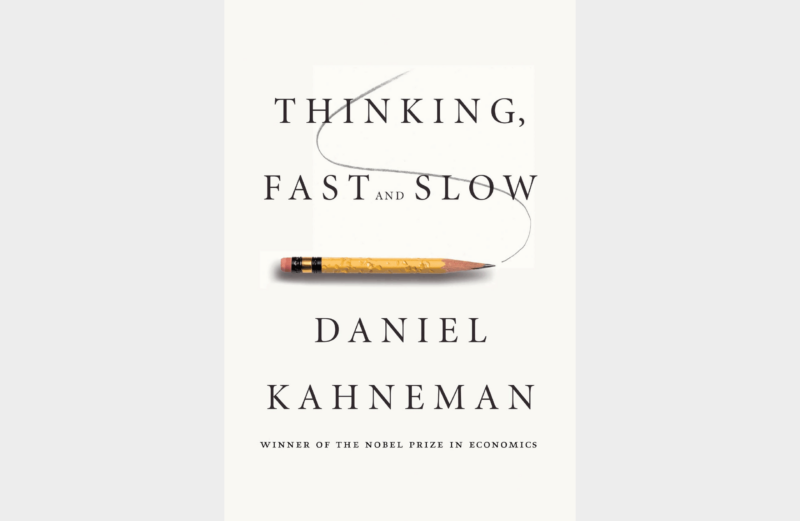
If Markovitz had fully grasped the essence of markets, rational investors would almost always win by managing errors and avoiding mistakes. If Kahneman had identified the real reason for the choices, the errors would be mainly the consequence of the mistakes inevitably suggested by the natural irrationality of the human mind. Having studied both over the years, it can be assumed that the two thoughts have a common logic. The mean variance of Markovitz allows us to average the different choices of individuals. The irrationality of Kahneman’s human being is the factor that feeds the variability with respect to the mean. The market applies Markovits’s mathematical finance to the factors that emerge from Kahneman’s mental irrationality, which determines the factors of its calculation. The students of Markovitz and Kahneman found elements of combined analysis.

I cite Sortino’s case. In his index—downside risk—he uses only negative returns to evaluate an investment, considering (before Kahneman) how the human mind tends to remember losses more than gains. Thaler also tries to calculate irrationality mathematically to gently correct its effects. There’s room to study more!
Article edited by Giuseppe G. Santorsola
Full Professor – Chair in Asset Management,
Corporate Finance and Corporate & Investment Banking
Parthenope University of Naples