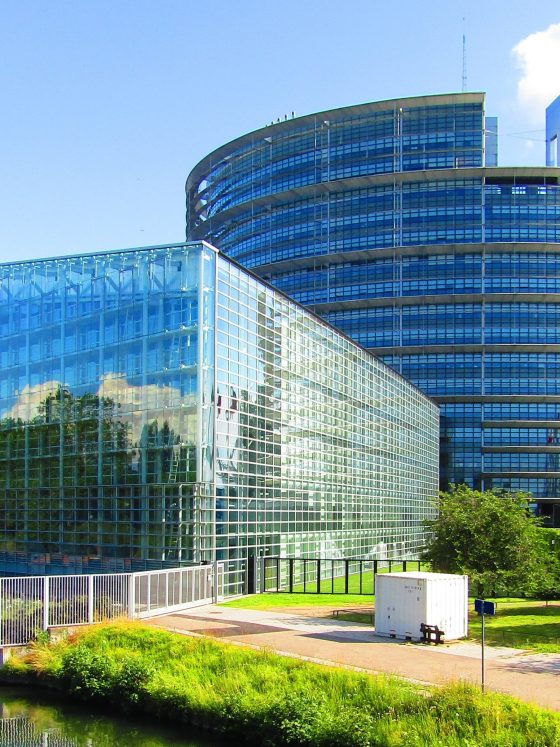
The days around the end of the year are characterised by dealing with the prospects for the following year in the light of what happened and the macroeconomic and international context. Today, dealing with this topic is more complex because the degree of uncertainty and instability is ever greater. The interpretative lines are less convergent and are conditioned by the profile from which they are observed, which is less and less economic-financial and more and more political and conflictual. We first identify structural factors outside macroeconomic, financial and banking environments; the general scenario is dominated by a conflict between world powers; the number of countries that believe, claim or trust to have a dominant role is growing and creating a context to which we are not accustomed. Moreover, some consolidated alliances, such as US-Europe and mainly the EU, are experiencing moments of instability, making the pivot around which we were used to taking decisions and confronting other interlocutors missing.
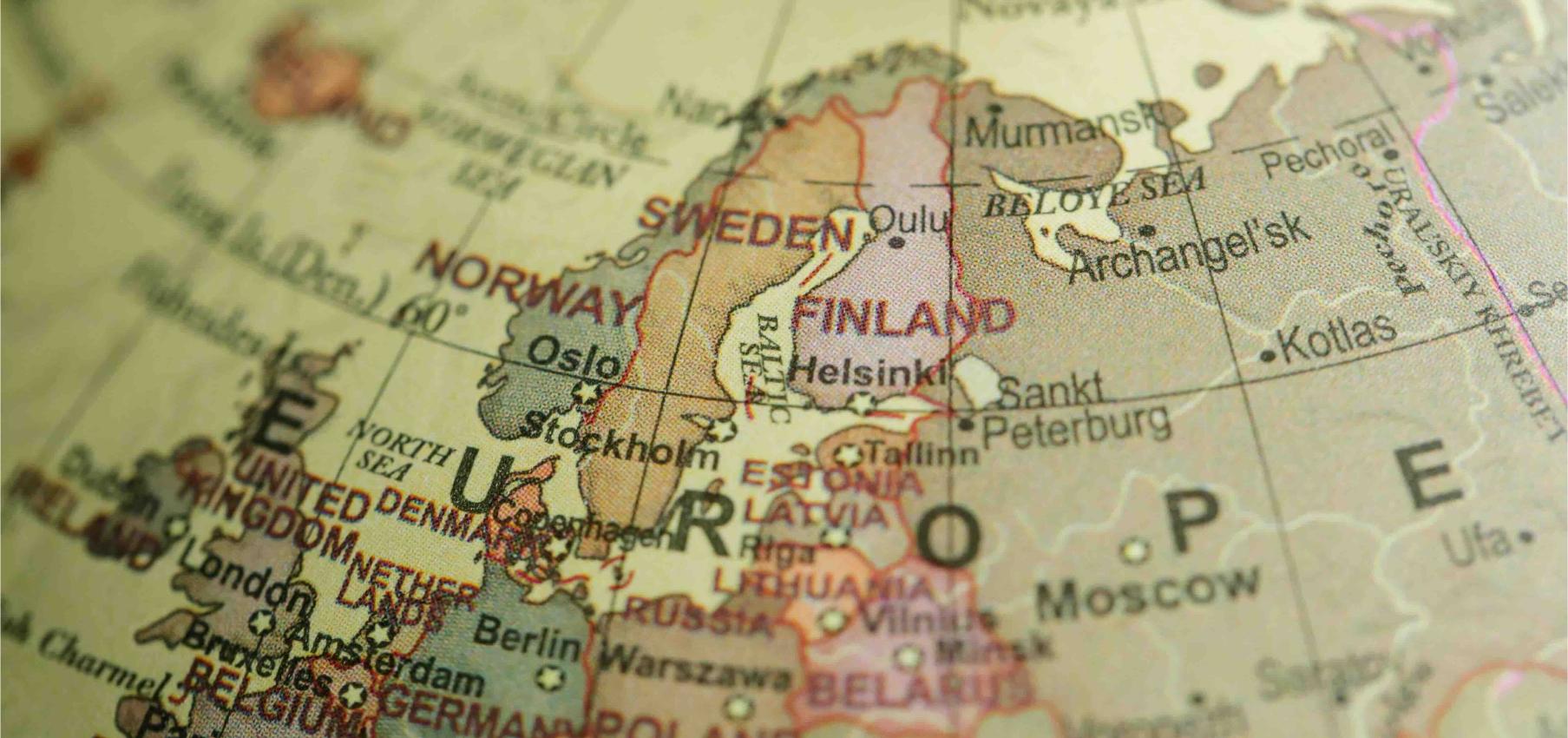
For some years, I have been drawing attention to the fact that there is no longer a bipolar vision of world government. The fall of the bloc long referred to as “communist” created a context that was not easily read; there is no longer an ideological opposition between capitalism and communism, but rather the will on the part of the countries that consider themselves strong to guide the great choices and impose their objectives on other states, including those historically leaders. Certainly, China has passed the phase of insertion into the logic of world government and is an essential interlocutor, not an ally of anyone, ready to dialogue with anyone, but with some basic shortcomings as a great power. In particular, the domestic product is high, but the per capita income remains low and poorly distributed, and the country remains highly uneven, with some developed, modern and high-potential areas and others underdeveloped and far from the conditions that allow China to compare itself with the rest of the world. India and the Arab world, indeed disunited, are two other growing poles with a future to organise, but a high potential. They are important nations, capable of influencing the other major nations, but currently lacking the governance capacity necessary to compete on an equal footing with the major nations. Forces necessary as interlocutors but not guiding forces. However, the possible alliances and the possibility of interests intertwining divergent alliances are very high. All other countries have uncoordinated reasons for seeking support now from one great power, now from the other, depending on their interests and their own factors of strength. They are not yet leaders, but necessary partners. The reader will wonder why so much attention is paid, as for me, to these topics that are not typically economic, certainly out of the ordinary. The reason is simple: what has been described creates a state of confusion for all the players in the economic-financial chain: planning and programming are increasingly difficult because the reference parameters are constantly changing, and the horizon on which to work is getting shorter and shorter, also because it has to be replaced by new objectives or new coefficients of variables. Objectively, an algebraic summation of uncoordinated effects is derived. Above all, financial intermediaries, who mediate between the various players in the system, suffer from the overlapping of industrial plans, strategic choices and effects of the choices taken previously and offer a limited contribution to the cohesion of the system.
Moving on to the examination of the more specific economic context, we enter a field undermined by controversies mainly of political origin. The political opposition parties constantly highlight a negative scenario, wrong choices and unfavourable prospects. On the other hand, there are statistical data that allow us to imagine and communicate a different situation.
Let’s try to summarise most objectively:
- International markets recognise a lower risk, and this should be the most qualifying summary factor; the markets do not engage in partisan politics and, rarely, favour the governments in office in their movements, without the comfort of real data.
- The spread, the dominant communication factor in the last 15 years in judging a country’s positioning on the financial markets, closes 2025 under 70 basis points, the lowest value, in fact, in this last period of time; in addition. The Italian value is no longer among the last; it is lower than that of France and suggests a decrease in the cost of public debt, despite the inevitable quantitative growth of its stock.
- The choices made in recent years by the Bank of Italy, which, during the phase of rising interest rates, avoided issuing longer-term issues, limiting the impact of their effects over time, can now extend them after the constant reductions by the ECB starting from 2024, also play a positive role.
- for the first time in 23 years, in November, the Moody’s agency raised its rating to Baa2, as a synthesis of a positive trajectory that, so far, had only changed the outlook; we emphasize that positive variations have been very rare since 2008; on the other hand, the markets had already expressed their judgment; we still consider that the rating agencies are strict and Moody’s statistically more than all others, and they are still conditioned by the events of 2008 and are certainly not affected by the partisan controversies in individual countries;
- the basic historical problem of the size of the Italian public debt remains; quantitatively it has exceeded € 3,000 billion and, above all, constitutes 135% of GDP; however, it should be remembered that it had reached up to 155% in 2000 and that it has a structure that determines its systematic increase over time (pensions, health, education, longevity risk), once it has been ascertained that attempts to cut public spending have no significant effect;
- a further positive quantitative figure concerns employment, whose gross value reached an all-time high of 62% with unemployment at 6%; whose youth level is at 19.8%, a value that is still high in absolute terms but much lower than in the past; some dissatisfaction remains if the values for fixed-term, permanent and part-time relationships are divided; we also read some geographical situations of lack of availability of suitable resources; there remains some asymmetry between the potential of resources and the quality of employment demand;
- on the other hand, the issue of the remuneration of income from work is still critical, the real value of which tends to constantly fall, as a factor that favors the increase in employment; this is the most critical point of the scenario because it has as consequences a brake on consumption, on the multiplication factors of economic activity and – from another point of view – on the level of satisfaction of the citizens involved;
- On the contrary, there remains only one possible solution to help solve this issue: the growth of the Gross Domestic Product. The upstream condition exists when inflation is under control, below the EU average and within the structural limits that, at least theoretically, are considered necessary to promote its growth; almost all analysts converge on this assessment; the discussion is obviously on how to promote its growth in a balanced and continuous way and with what tools.
- the solutions of recent years have not been satisfactory, they have increased the public debt (citizen’s income and 110% bonus, now at 65% with different limits); their cost of about €200 billion has exceeded the positive impact on GDP (about €90 billion), causing a final effect contrary to that desired; in perspective, it must also be considered that, with 2026, the thrust effect of the Next Gen Plan will end, which will be calculated algebraically with the self-generating effects deriving from the impact of the investments developed with the various PNRRs put in place, considering that the latter experience is essentially unrepeatable in nature (created after the pandemic), size (markets would hardly refinance) and practicability as the European Union does not have the strength and cohesion to repeat it, as well as having to defend itself against all the challenging factors examined above;
- the last variable of economic policy remains, namely the balance of payments; the only strong point during the recessionary phase of the 10s suffered the wavering impact of the 1920s and will remain strongly conditioned by discontinuous choices at the political level as demonstrated in 2025 by the issue of tariffs, whose moves, objectively, were generated and managed outside any economic logic and used as a mere weapon of political pressure without correct calculations of the effects: a short battle that, I fear, will have repercussions in the future on the natural balance of the economy; I only remember that the modern economy was born precisely by abolishing tariffs and feeding the weapons of liberalism as much as possible.
The issue, however, remains on the agenda, also conditioned by the many uncertainties described here. A new Age of Uncertainty after the one described by J.K. Galbraith in his book in 1964. Will anyone be able to read it adequately?
Article edited by Giuseppe G. Santorsola
Senior Full Professor
Chair in Asset Management – Catholic University of Holy Heart, Piacenza