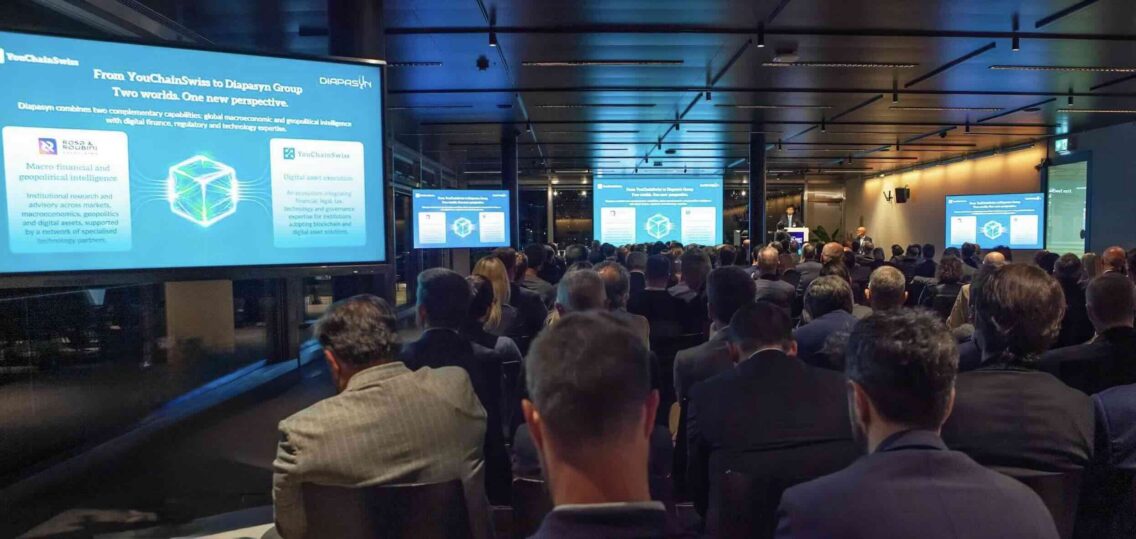
LAC Lugano Arte e Cultura hosted a gathering that few cities could stage. The third Digital Asset Summit, promoted by YouChainSwiss and Diapasyn Group, brought together five institutions at the very centre of the international monetary system, the Bank for International Settlements, the European Central Bank, Deutsche Bundesbank, Banca d’Italia and the Swiss National Bank, and seated them beside banks, asset managers, market infrastructures and pension investors. Those who write the rules of digital money, in short, shared a room with those who must apply them. The thread running through the evening was clear. The rulebook for digital assets is largely written; adoption on a meaningful scale will only follow with legal certainty, interoperability and central bank money at the heart of settlement. Central bank digital currencies, stablecoins and tokenised deposits will each play their own distinct and complementary part.
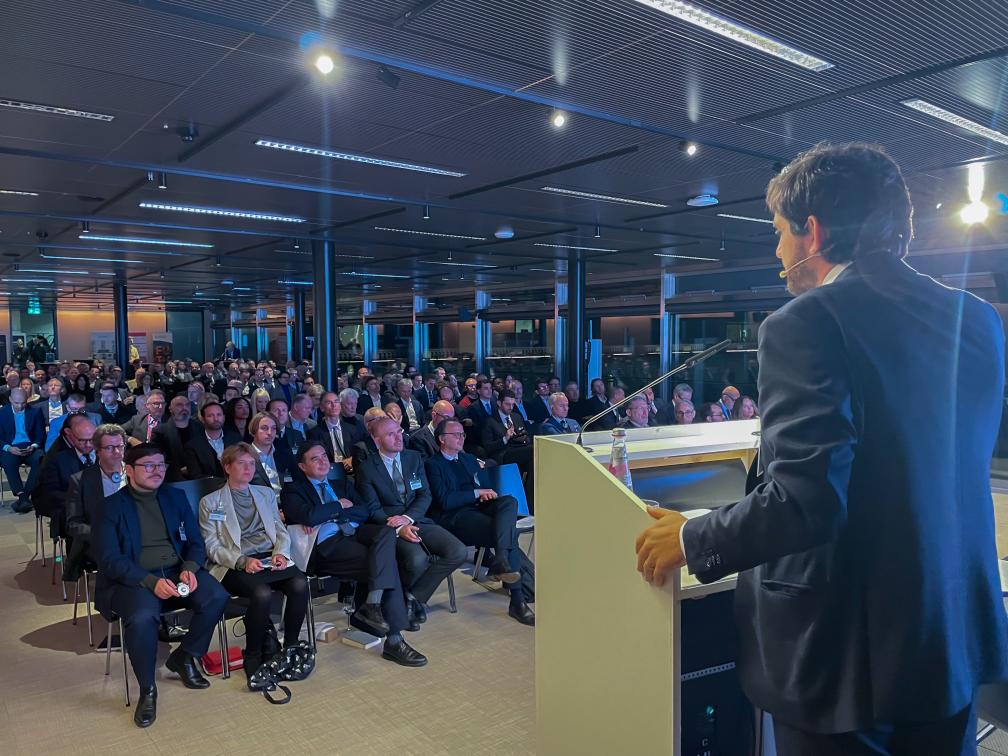
Livio Falcone, President of YouChainSwiss and CEO of Diapasyn Group, opened proceedings by introducing the new group, formed in June 2026 by uniting Rosa & Roubini Associates, a macroeconomic and geopolitical advisory firm, with YouChainSwiss, the network founded in Lugano in 2021 after Switzerland introduced its distributed ledger technology law. The name blends Digital Asset Partner with the Greek prefix syn, meaning together. Diapasyn coordinates some 30 specialised partners, each regulated in its own jurisdiction, with offices in London, Zurich, Lugano, Milan, Dubai and Singapore. “Diapasyn was created to support banks, asset managers and family offices that cannot build in house expertise and structures for digital assets. We offer the specialisation of our partners through a single point of contact: strategic analysis and local execution, together,” Falcone said. The keynote belonged to Breige Tinnelly, Chief Strategy Officer of Aquarius, the technology platform of international law firm Reed Smith. The market, she observed, no longer asks whether digital assets will be permitted, but why they have not yet been widely adopted. Stablecoins exceed USD 300 billion and tokenised real world assets USD 30 billion, yet pilots still outnumber projects in production. Moving on requires three decisions, none of them technological: permanent rules, legal certainty for infrastructure and collateral, and recognition across borders.
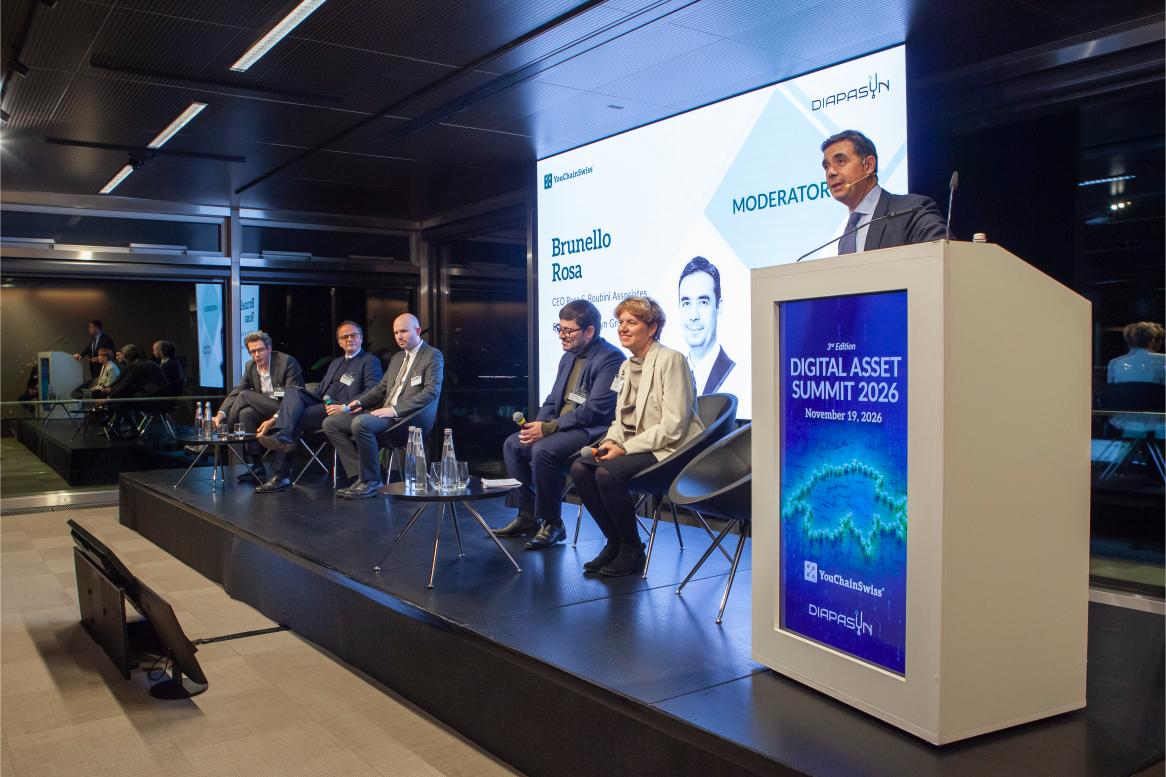
The round table on central bank digital currencies was moderated by Brunello Rosa, CEO of Rosa & Roubini Associates and Chairman of Diapasyn Group, with Jon Frost of the Bank for International Settlements, Paul Gardin of the European Central Bank, Esther Wandel of Deutsche Bundesbank, Nicola Branzoli of Banca d’Italia and Robert Oleschak of the Swiss National Bank. They examined the state of CBDCs worldwide; the case for the digital euro, expected in 2029, as a complement to cash and an instrument of sovereignty in payments; and settlement in tokenised central bank money, from Pontes, live in the Eurosystem since September 2026, to Helvetia, through which the Swiss National Bank has settled wholesale CBDC transactions since 2023. Stablecoins, and the conditions under which private liabilities may enter the monetary system, were discussed at length. “All these forms of digital money can, and indeed should, coexist: each serves different purposes, and this will be a source of stability for the system,” Rosa remarked.
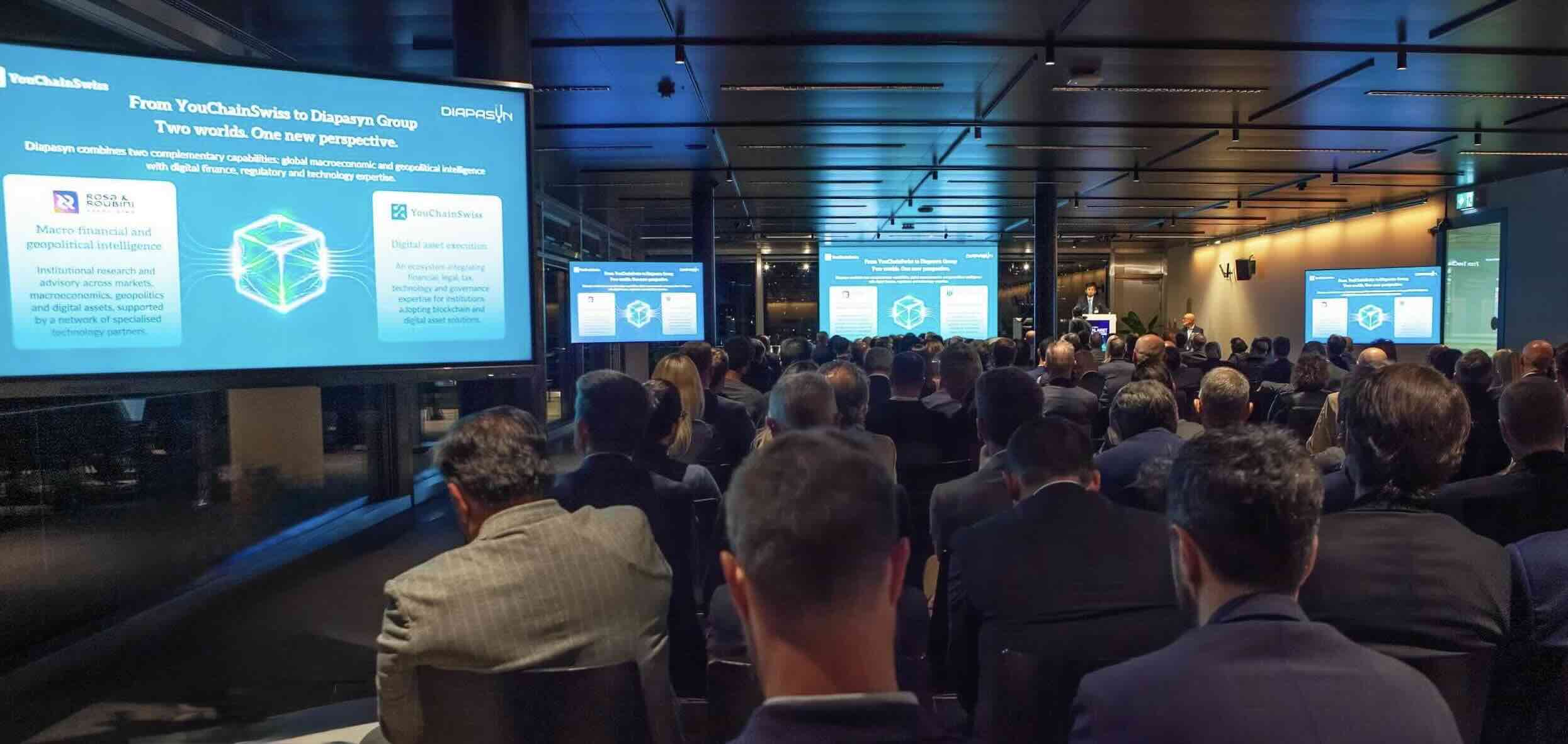
The second panel, led by Alessandro Piccolella, Vice President of YouChainSwiss, followed the digital finance value chain link by link. Florian Erlach, CEO of WhiteBIT.EU, described market access through a platform authorised under the EU’s MiCA regulation. Filippo Moor, Executive Director at Gonet & Cie SA, shared a private bank’s experience of digital asset custody and lending secured by Bitcoin and Ethereum. Rafael Mastroberardino of Franklin Templeton presented BENJI, the SEC registered money market fund that exists only on blockchain, while Carlo Mondani of SIX Securities Services explained the integration of SDX into SIX SIS, a single access point for traditional and digital instruments. Giuseppe Longo, Vice President of Assoprevidenza, named four conditions for a pension fund to invest in tokenised instruments: legal certainty, risk management, real liquidity and competent governance.
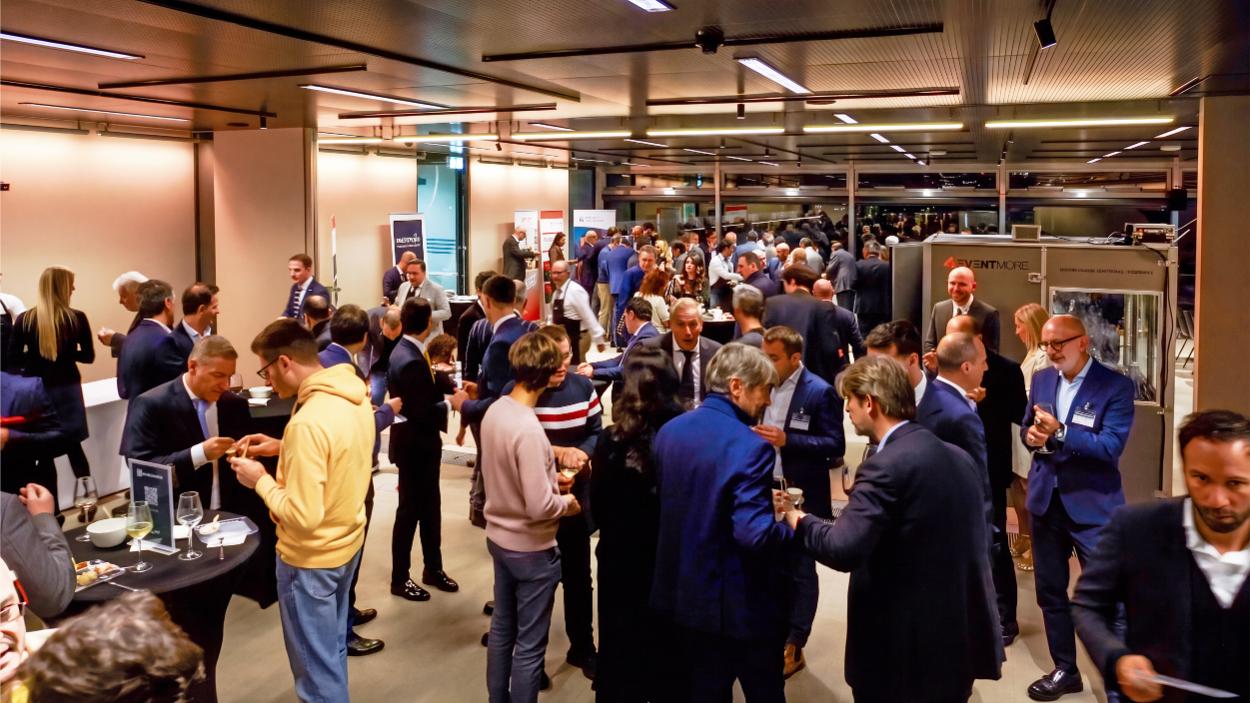
The final moments looked ahead. Oliver Schmitt, CEO of VI3NNA Congress, presented the partnership with YouChainSwiss, signed that morning before the Mayor of Lugano and the Consul of Austria, ahead of the Vienna congress on 13 and 14 May 2027. Lorenzo Barisone of the City of Lugano conveyed the greetings of Mayor Michele Foletti and introduced SwissLedger, the blockchain promoted by the City. Paolo Bortolin, board member of the Crypto Valley Association, called for closer links between Ticino and Zug, Geneva and Zurich, while Marco Lucchin, Director of Italian House Davos, announced the Italian House day at the World Economic Forum on 21 January 2027, by invitation only and moderated by Brunello Rosa. The Summit was supported by Franklin Templeton, Banque Gonet et Cie SA, Reed Smith and WhiteBIT, under the patronage of the City of Lugano, the Crypto Valley Association, VI3NNA Congress, Rosa & Roubini Associates, Italian House Davos, the Swiss Chamber of Commerce in Italy, the Italian Blockchain Association, Lugano’s Plan B, ASSOCASP and Via Nassa Lugano. YouChainSwiss, which combines legal, financial, tax, technology, governance and training expertise, has organised the event since 2024.

If earlier editions asked what digital money might become, this one suggested it has already arrived; the task now is persuading the world to use it, and Lugano clearly intends to be where that happens.
Discover more @ youchainswiss.ch / diapasyn.com

Article edited by Massimo Basile
Editor & Founder