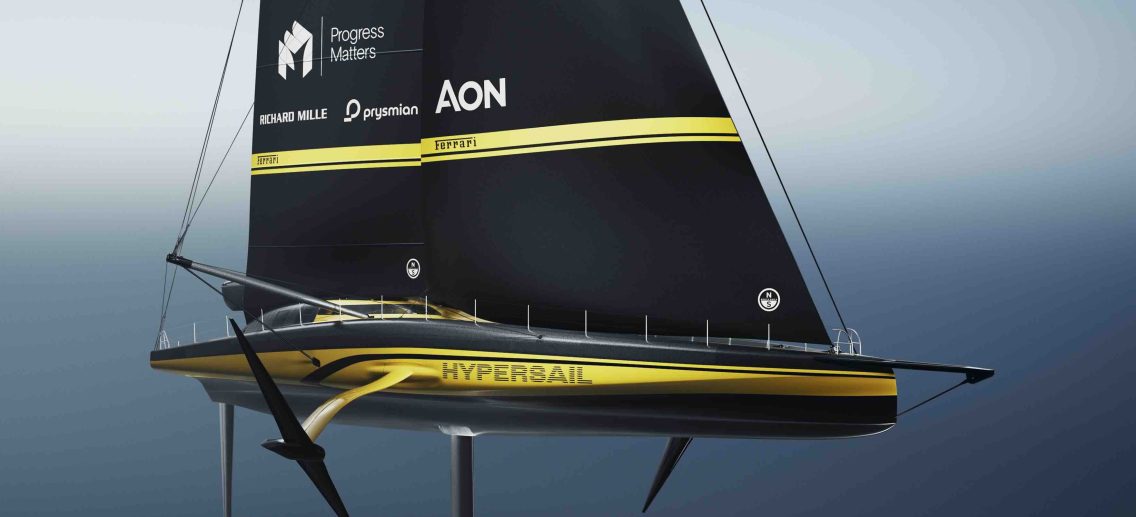
The Maranello-based motor manufacturer has unveiled its first sailing vessel: a futuristic 30-metre foiling monohull designed to fly across the water at 50 knots. When luxury, design, and technology sail in perfect unison. Ferrari, the iconic Italian marque, has resolved to expand its horizons and make its entry into the world of offshore sailing with a visionary project that will carry the Prancing Horse to the conquest of the oceans.
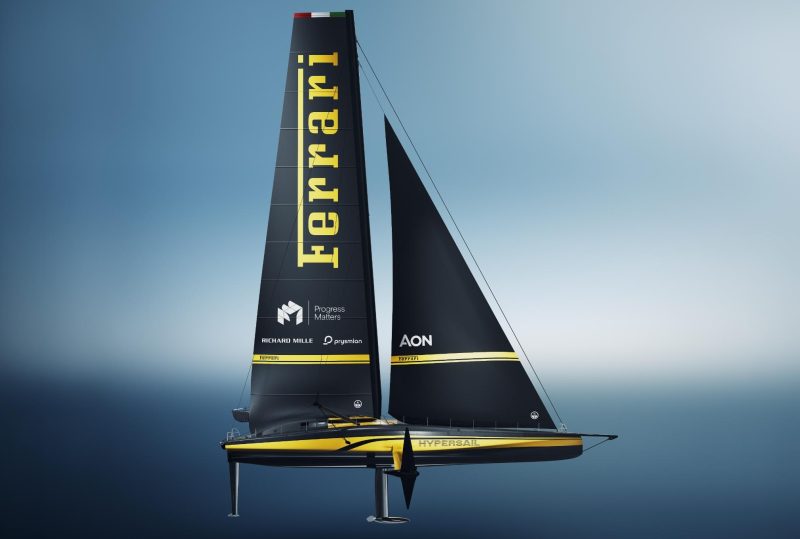
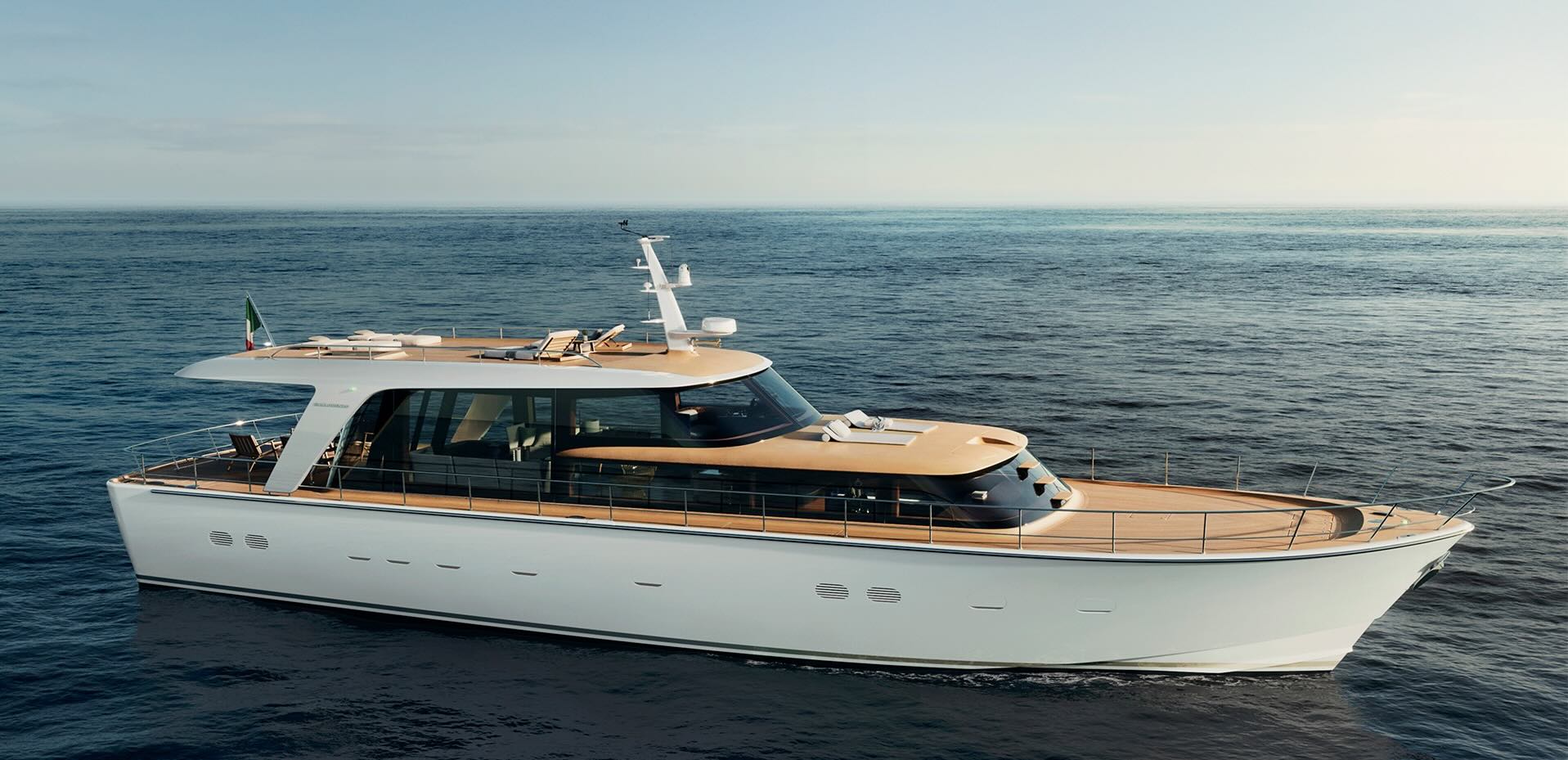
The Maranello stable has unveiled Ferrari Hypersail, the brand’s first sailing thoroughbred, a high-speed monohull prototype representing, for the company, an unprecedented challenge away from the tarmac, bringing Ferrari’s hallmark excellence to ocean passage-making. Unveiled during Milano Design Week 2026, Hypersail is a racing monohull of over 30 metres (100 feet) built in carbon fibre and designed to fly above the water’s surface by means of a sophisticated foiling system, hydrofoil appendages that, when underway, enable the hull to lift clear of the sea, maintaining only three contact points and harnessing wind energy in the manner of an aircraft. This system reduces hydrodynamic drag whilst markedly increasing boat speed, up to a maximum of 50 knots. The ultimate aim is to set new outright world records over ocean distances.

John-Elkann – Executive Chairman Ferrari
The Hypersail project has captivated John Elkann, heir to Gianni Agnelli’s empire and current Chairman of Ferrari, himself a keen amateur sailor. With this aerodynamic, cutting-edge vessel, the House of the Prancing Horse redefines the boundaries of nautical luxury through a blend of performance and design.

Flavio Manzoni – Chief Design Ferrari
The aesthetic of Ferrari’s iconic racing cars merges with the most advanced maritime technology in offshore sailing. Style and engineering have joined forces in pursuit of a shared vision, bringing together diverse areas of expertise in a collaboration between the Ferrari Tech Team led by Matteo Lanzavecchia and Marco Guglielmo Ribigini, the Ferrari Design Studio headed by architect Flavio Manzoni, and the French naval architect Guillaume Verdier, renowned designer of foiling sailing yachts and one of the most eminent names in international offshore racing. The initial development phase also benefited from the involvement of ocean racing sailor Giovanni Soldini, celebrated for his singlehanded offshore races, who was subsequently succeeded by Enrico Voltolini, a naval engineer with experience in the America’s Cup and SailGP.
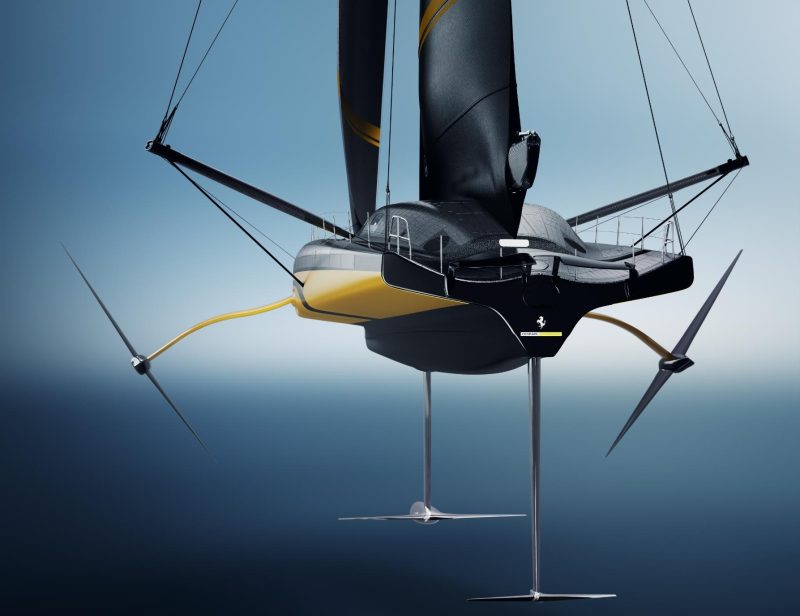
With its slender silhouette and revolutionary concept, Hypersail presents a design that transcends pure aesthetics to become entirely functional in mediating the interplay between wind, water, and speed. The result is a compelling sailing yacht in which engineering and aerodynamics are transformed into sheer beauty. Maranello’s new sailing vessel draws its inspiration from the Ferrari Monza SP1/SP2 and the hypercar racing prototype 499P, winner of the legendary Le Mans motor race.
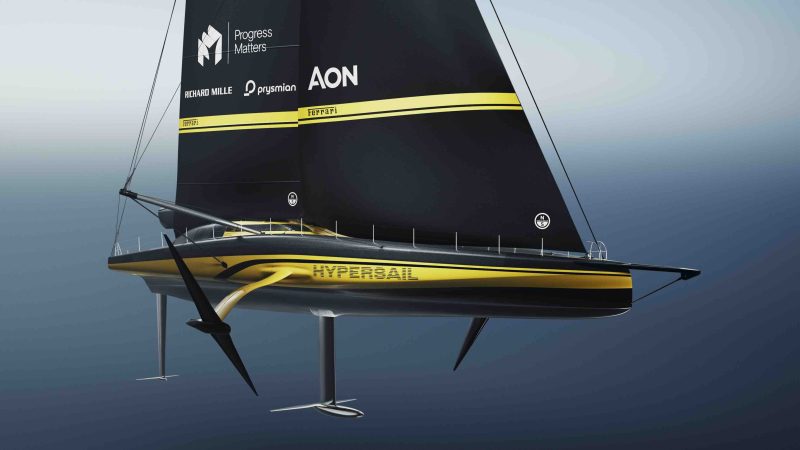
The distinctive livery of Hypersail is defined by a chromatic contrast between the dominant dark Grigio Hypersail of the carbon fibre hull and sails, and the vivid Giallo Fly accents, among which the unmistakable Ferrari badge stands proud. This is no arbitrary stylistic choice but a deliberate decision by the Ferrari Design Studio, which selected this colour as a tribute to the marque’s heritage. After the iconic Ferrari red, the marque’s most recognisable hallmark, yellow represents the second soul of the Maranello brand. This hue was chosen by founder Enzo Ferrari both to pay homage to the heraldic colour of Modena and to honour the wishes of his friend Fiamma Breschi, widow of the racing driver Luigi Musso, who famously wore a yellow helmet. Giallo Fly was first adopted in 1964 on a 275 GTB, the first yellow Ferrari in history, a 1960s icon that gave rise to a shade destined to become legendary and to characterise the most celebrated cars ever to bear the Prancing Horse badge.
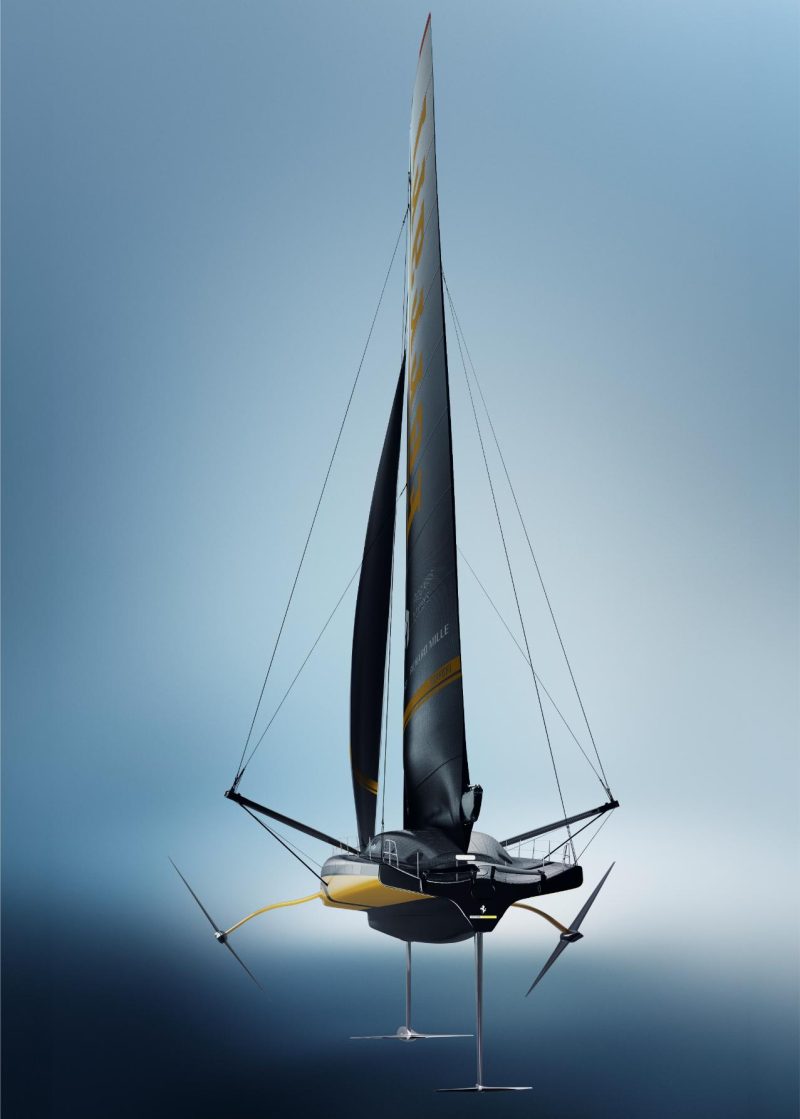
Yet Hypersail stands out not merely for its striking design and performance credentials: the yacht also has the distinction of being environmentally sustainable and of achieving full energy self-sufficiency. The power that drives the vessel is generated entirely from renewable sources, solar energy, wind, and motion, which render conventional combustion engines wholly unnecessary. Principal amongst the energy sources are the solar panels integrated into the coachroof and topsides, which maximise solar exposure; being walkable panels, they place no restriction whatsoever on the freedom of movement of the crew on deck.
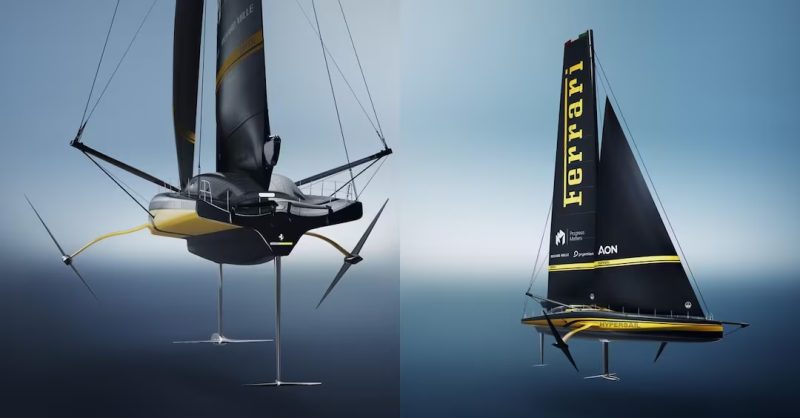
Currently under construction in Italy, Ferrari Hypersail, which will be the largest foiling sailing yacht of its type ever built, is approaching its sea trials phase and is scheduled to begin sailing in 2027, thus heralding a new era in ocean voyaging that will carry Italian excellence towards bold and thrilling new horizons.
Article edited by Roberta Vanore