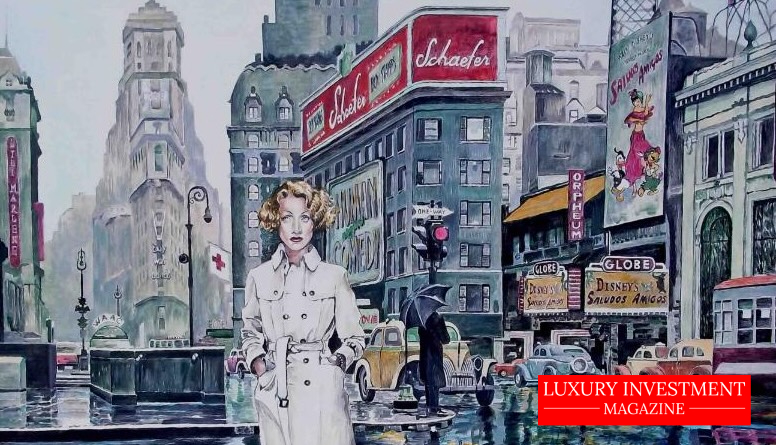
Giò Stefan, an independent artist, portrays the condition of contemporary man on canvas, weaving together aesthetic enquiry and the search for identity. Her training as an interior designer surfaces in a discreet yet significant way in the construction of environments: space, indeed, is never merely a backdrop, but rather an essential narrative element, defined by the architecture of the metropolis and traversed at speed by luxury cars and motorcycles. Her body of work reads as a sustained attempt to answer a profound existential question, one bound to the essence of the individual and the possibility of redefining oneself through a double, an alter ego that manifests itself in the artistic representation of the self.
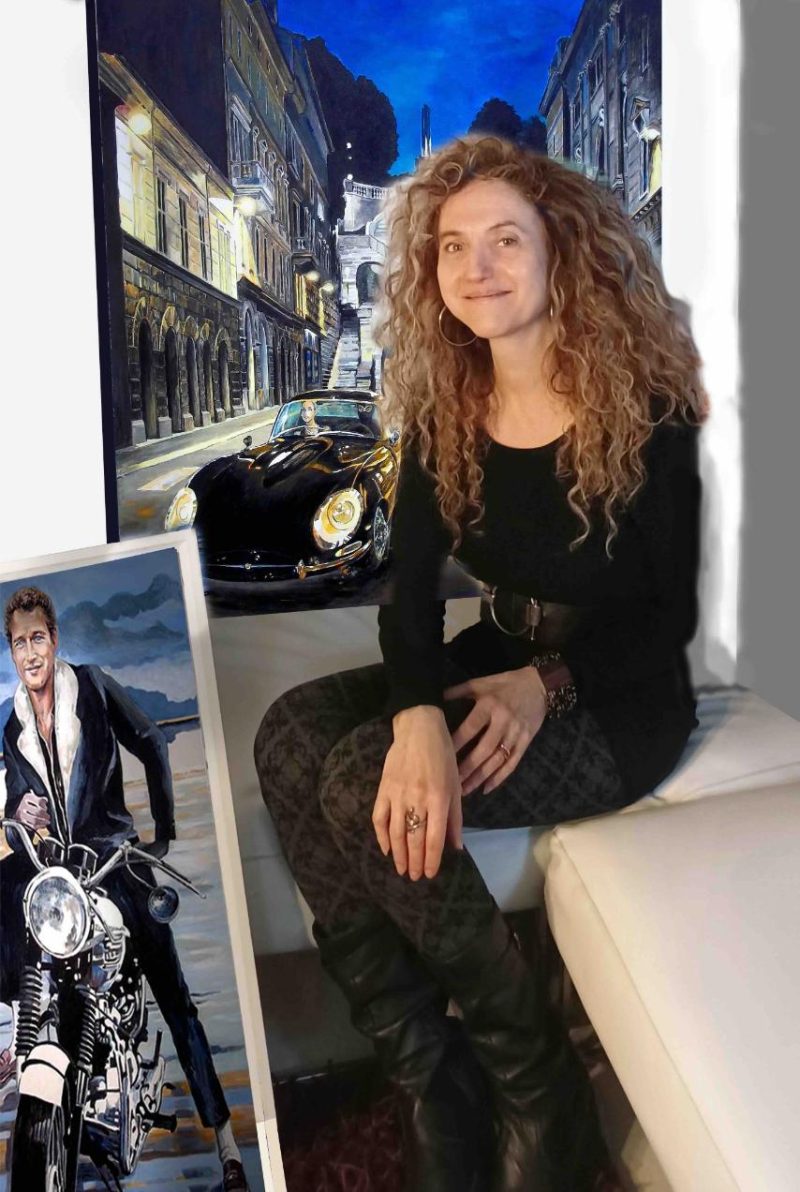
– Artist Giò Stefan –
The artistic influences she draws upon, spanning cinema, graphic design, and the comic strip tradition, contribute to shaping an imagery that is at once cult and richly layered. At first glance, one discerns an ironic and narrative sensibility that recounts the everyday with lightness and precision, in the manner of the great illustrator Norman Rockwell. At the same time, more romantic and rétro atmospheres emerge, inhabiting a suspended, almost nostalgic dimension reminiscent of the towering figures of Edward Hopper and Jack Vettriano. And yet Giò Stefan does not merely cite these references: she employs them as instruments with which to construct a personal visual language, in which the past is in constant dialogue with the present.

The fulcrum of her poetics is a magical realism that manifests itself above all in her metropolitan vistas. Here, urban space becomes the theatre of a complex narrative, in which suggestions drawn from diverse geographies and temporalities interweave. The cities appear to belong simultaneously to multiple places and multiple eras, confronting one another across the strata of space and time. In Stefan’s poetics, places reveal the relationship between man and his history, the values he holds and those that shift with the passage of time.
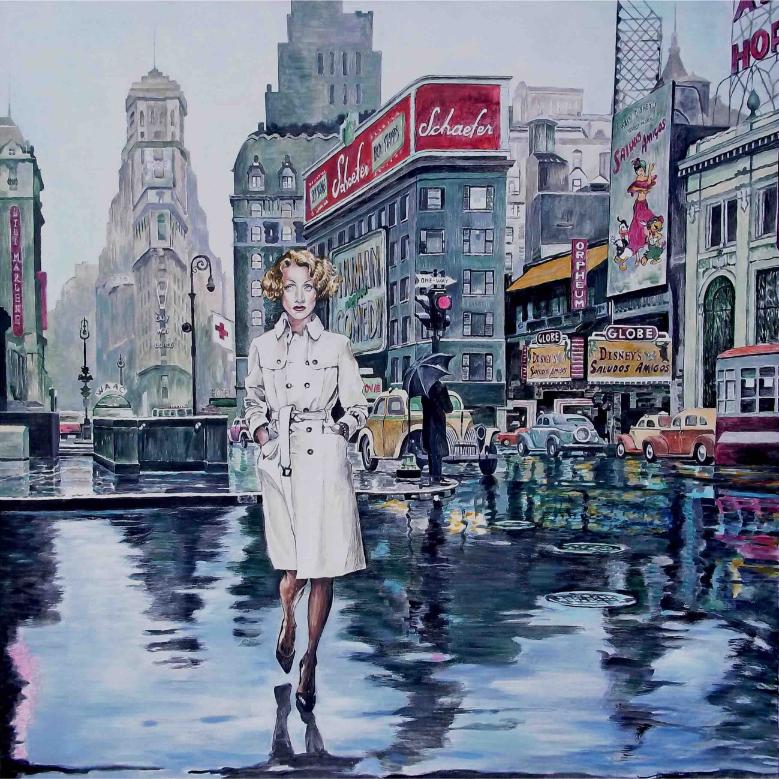
A distinctive feature of her output is an attentiveness to objects, frequently drawn from industrial design and the cultural heritage of the twentieth century. Iconic automobiles, motorcycles, period telephones, typewriters, and other furnishing elements are not mere nostalgic citations, but genuine symbols of profound cultural change. Through these details, Giò Stefan recounts how technological progress and the cinema have contributed to redefining not only lifestyles, but also the values and aspirations of the modern individual. Humanity reshaping technology, and technology reshaping humanity. The cinematic dimension plays a fundamental role. Her images resemble frames extracted from a broader narrative, suspended at a moment of tension or anticipation. This contributes to generating a sense of mystery that invites the viewer to complete the story. Seen in this light, the work does not exhaust itself within its purely visual dimension, but opens itself to the active participation of its audience, who are called upon to interpret it and to project their own experience onto it.

Her exhibition career, which has unfolded across a variety of contexts, from the historic villas of the Italian peninsula to international cultural venues, likewise attests to a capacity for dialogue with heterogeneous audiences. This openness is reflected in the very nature of the works themselves, which lend themselves to multiple levels of reading. Yet it is precisely this interpretive plurality that presents a challenge: that of maintaining a stylistic and conceptual coherence strong enough for a distinctive authorial identity to be clearly discerned. Giò Stefan demonstrates a remarkable ability to reconcile aesthetics and content, constructing images that oscillate between formal elegance and latent disquiet. Her research moves along a delicate balance between citation and innovation, between the detail and the whole. Like a journey into the past, her canvases and her dedication restore to us revelations that are, in every sense, of the present.
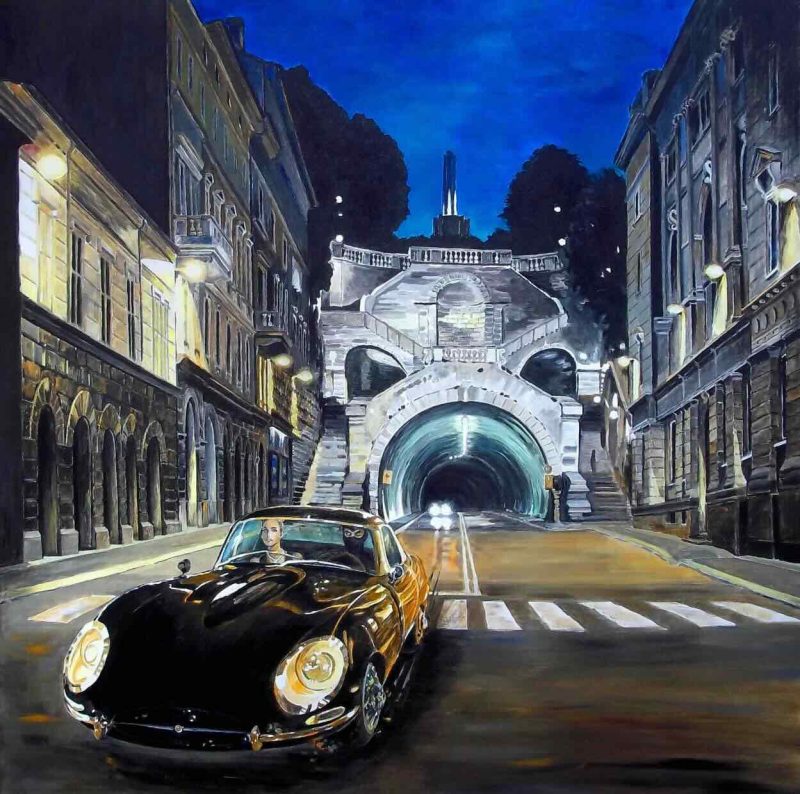
Art is a necessity, and Giò Stefan’s necessity is to probe the unresolved enigma that lies concealed within the fabric of everyday life.
Discover more @ giostefan.com

Article edited by Prof. Luca Caricato
Luca Caricato – The World of Art
Leonardo Da Vinci Scholar – Art Historian – Art Expert