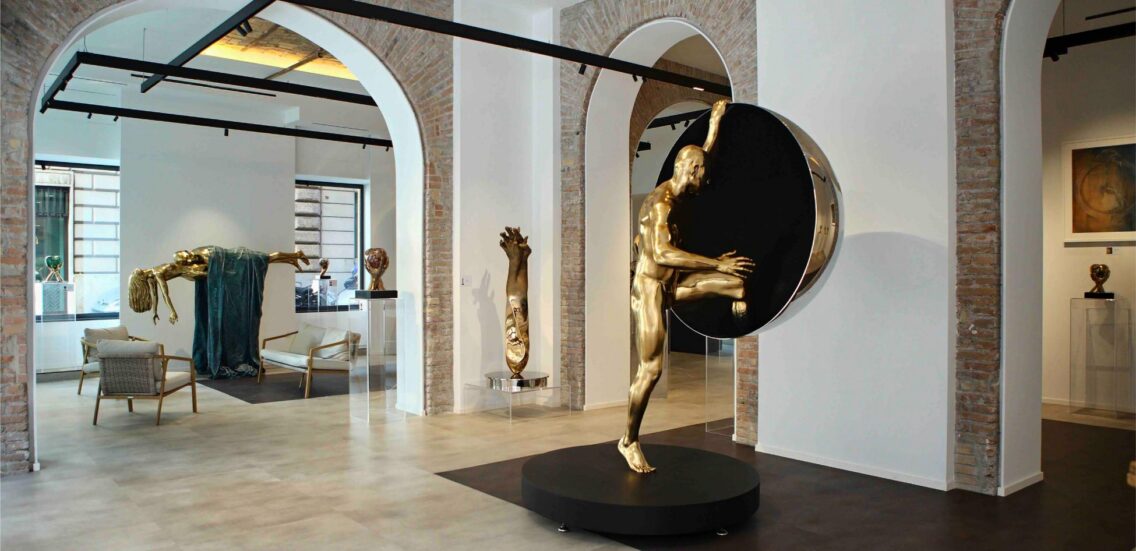
Lorenzo Quinn has returned to the city of his birth. He has done so with “Hi Human – L’uno nell’altro,” an exhibition devoted to human connection in a world increasingly governed by the digital realm, to which the title itself gives a knowing wink while turning its perspective on its head. The first Roman solo show by an artist who ranks among the most internationally acclaimed names in Italian figurative sculpture springs from a question: if technology broadens humanity’s horizons by the day, are we still able to recognise and cherish what makes us human? Within the Teldil Art Gallery, overlooking Corso Vittorio Emanuele II, Quinn’s works urge us to rediscover the encounter with the other, something no technological innovation can replace. It is an invitation voiced by the artist himself at the opening, when he spoke of an art that builds bridges, unites and reaches out a hand.
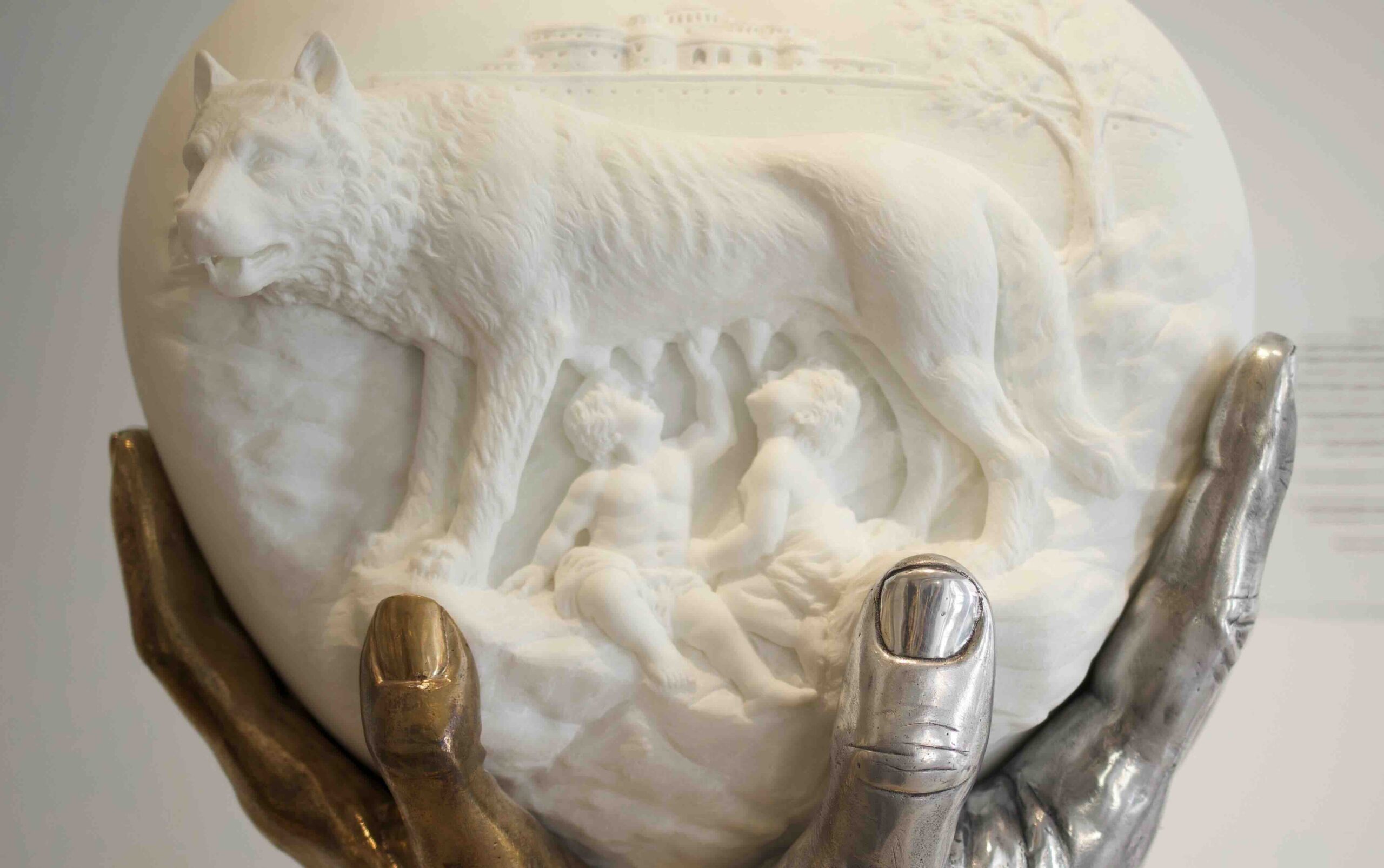
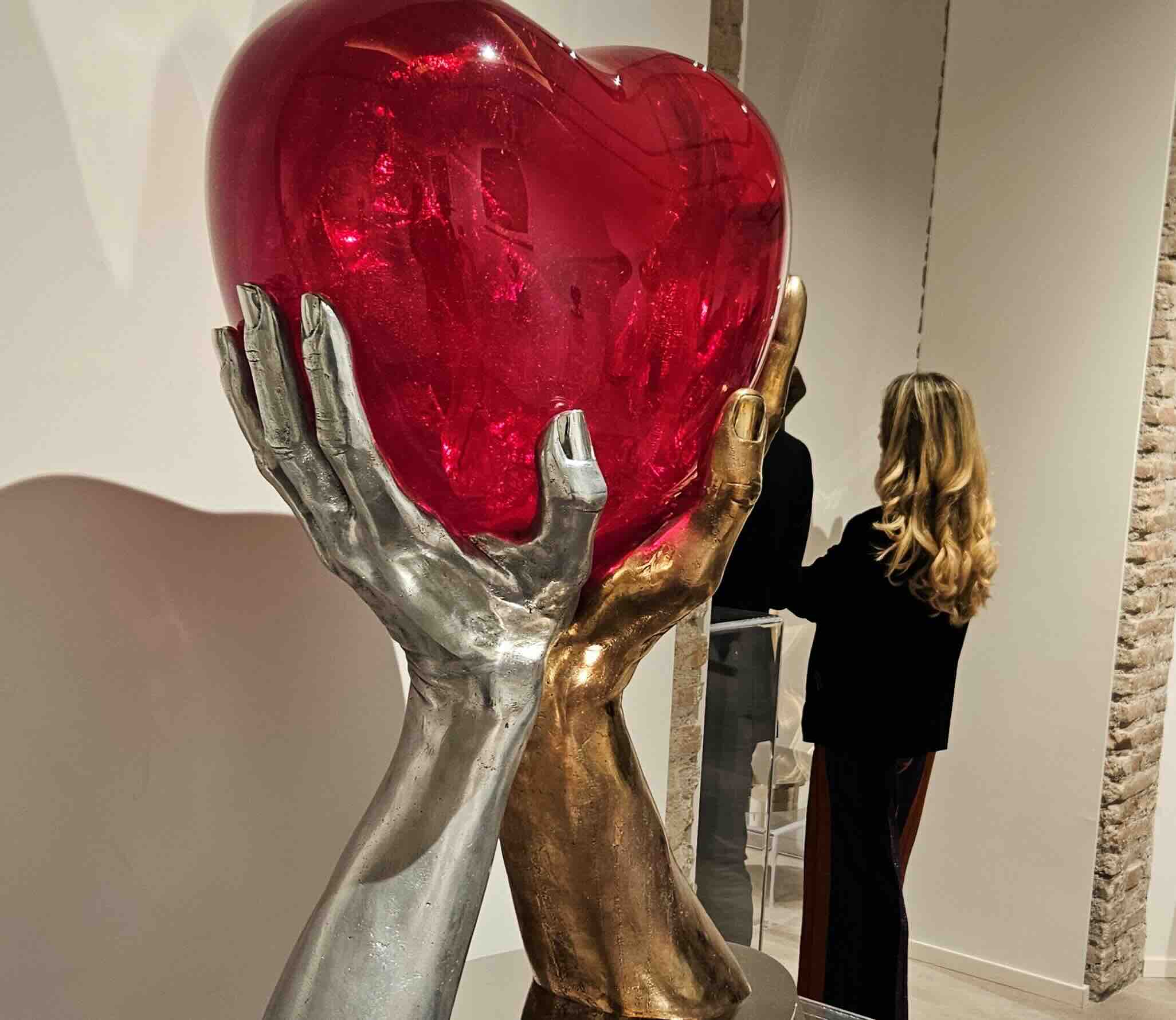
If Marshall McLuhan read every tool as an extension of human faculties, curator Marco Giammetta lays claim to another kind of extension: that of the senses, of feeling, of closeness. In an age that cinema has already pictured falling in love with an artificial voice, as in Spike Jonze’s “Her,” the exhibition does not put progress on trial. It reorients it. Being connected is not the same as being bound to someone, the exhibition seems to warn. The discourse thus spills over into the contemporary debate on the centrality of the person, reaching as far as the call to fraternity in Pope Leo XIV’s encyclical. The centrepiece of the exhibition is Mater Roma, a new sculpture created especially for the capital, which the Mayor of Rome, Roberto Gualtieri, was able to admire ahead of the opening. A pair of hands rises to shelter a heart, within which the she-wolf suckles the twins. In the artist’s reading, the founding legend sheds its martial tones and becomes a hymn to nurturing tenderness, while the age-old icon of the Capitoline Museums regains an almost domestic gentleness. The opening, attended by the artist, drew a distinguished crowd; among the guests was Jenny Di Marco, presenter of Fashion Air TV.
“Rome was not born of conquest, but of a whisper of love. With Mater Roma I wish to remind us that true greatness is not measured by the empires we build, but by the lives we protect, the hearts we nurture and the love we leave behind. Because, before Rome became eternal, it was cradled in the embrace of love,” said Lorenzo Quinn.
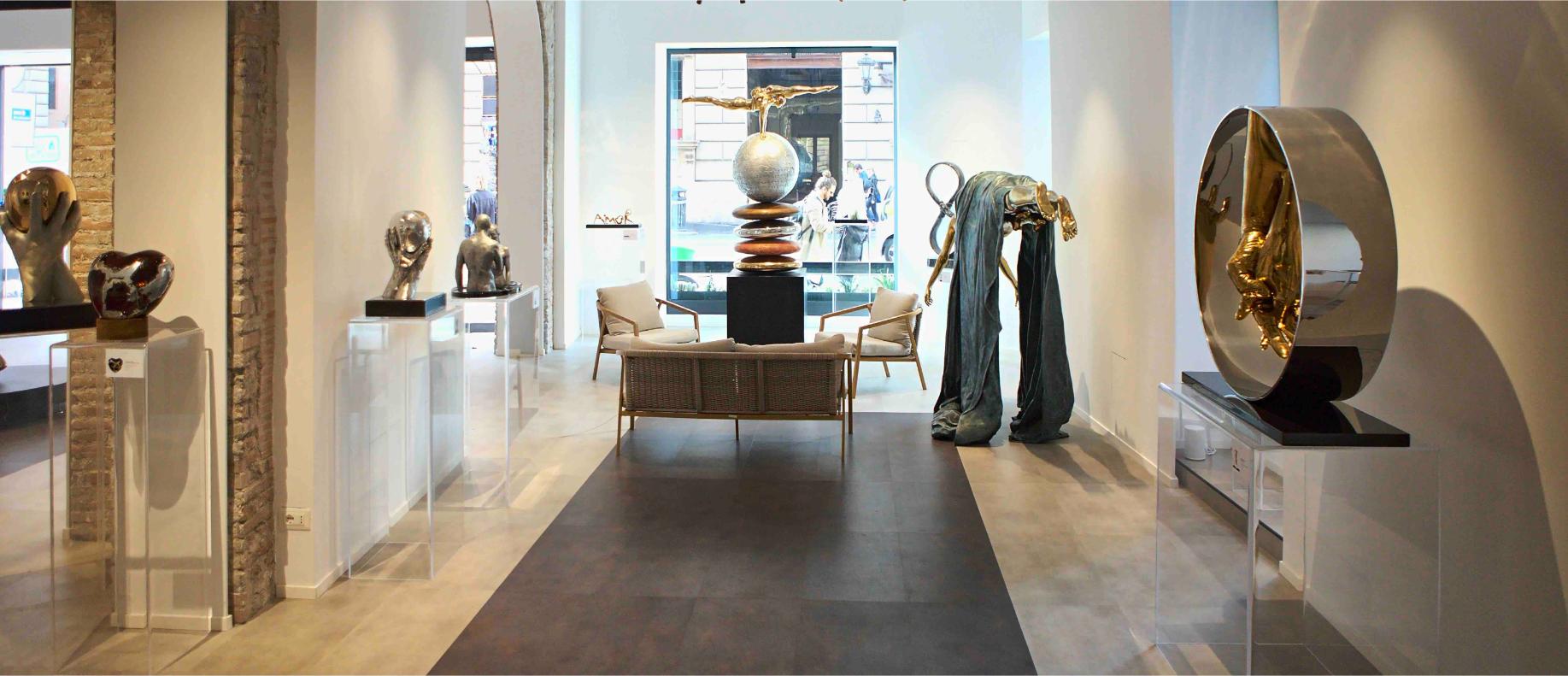
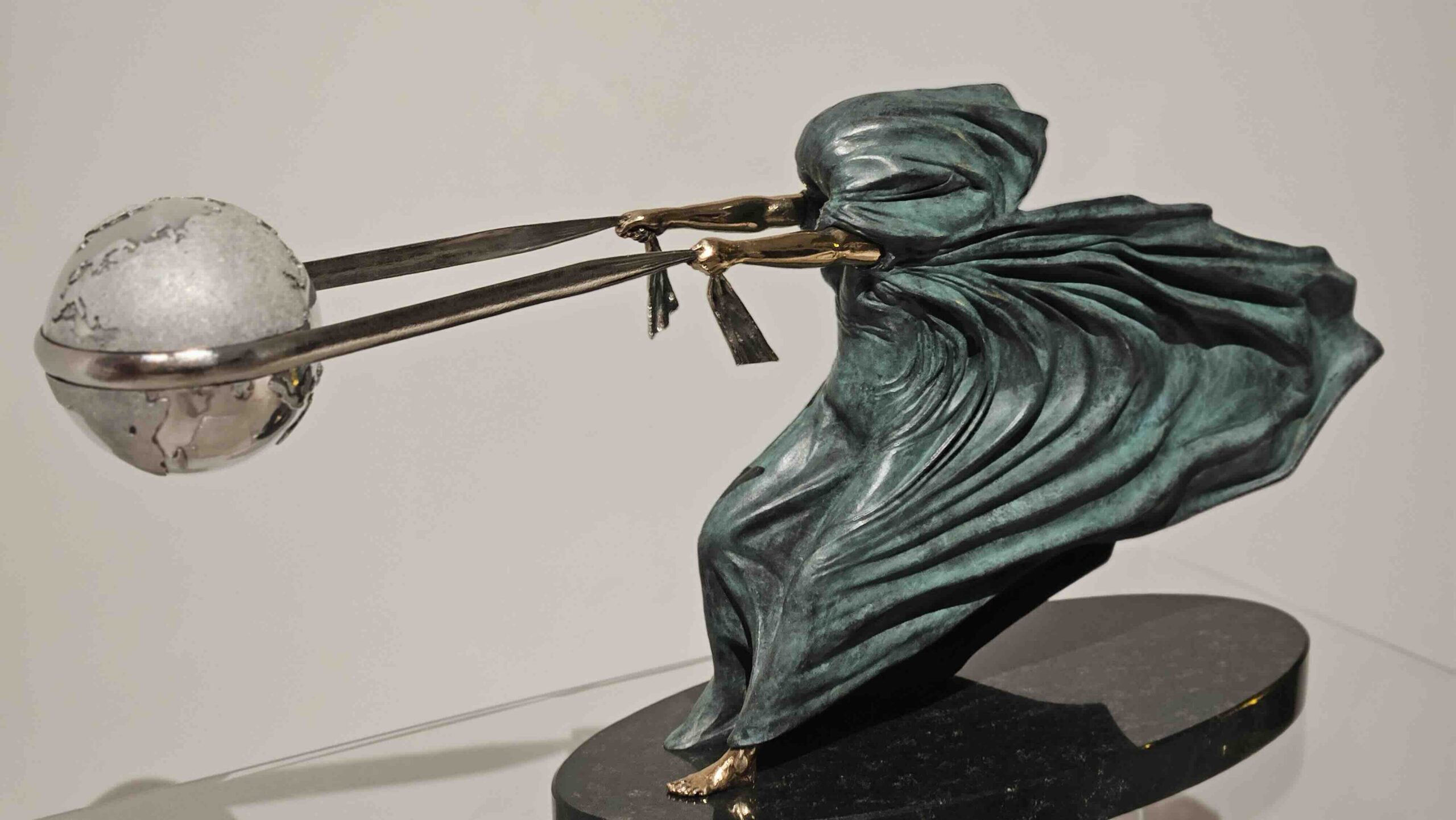
In Quinn’s visual grammar, the hand has always been the most eloquent sign. Venice knows this well: in 2017 the hands of Support rose from the Grand Canal to hold up Ca’ Sagredo; two years later, at the Arsenale, Building Bridges interlaced six pairs of them. In the Roman rooms those hands brush, clasp and become a shelter for one another. The material is dense and tactile, yet the true subject eludes touch: it is the silent pact that binds two presences. One thinks of Adam’s finger in the Sistine Chapel, suspended a breath away from the Creator’s. Quinn closes that gap and turns it into contact.
The venue, too, seems chosen with purpose. Opened last May by Teldil Moreira after two decades in the art world, the gallery occupies a historic Banca d’Italia building and spans more than 600 square metres. Its ambitions are far-reaching: to restore Rome to the ranks of the cities that matter to contemporary art collectors. “Collecting means not only acquiring important works, but building a cultural legacy destined to endure,” remarked Moreira.
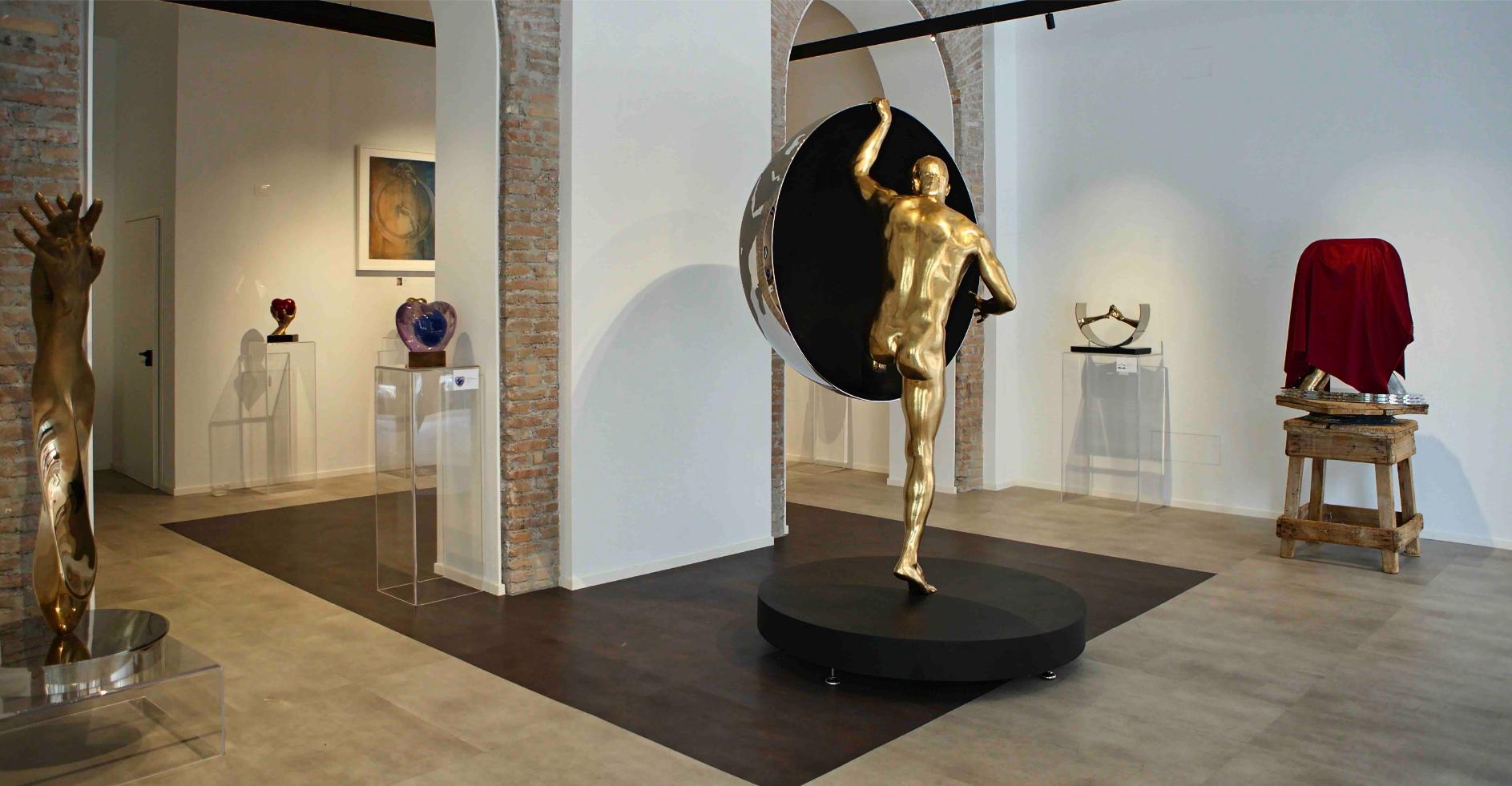
The gallery’s debut, devoted to Igor Mitoraj, welcomed more than 3,000 visitors, and the course now seems set. A clear thread runs between the Polish master’s fragmented bodies and Quinn’s figures: figurative sculpture as an antidote to the dematerialisation of the present. In a city that has entrusted its memory to marble and bronze for two thousand years, Hi Human shows that the most advanced gesture remains, still, that of the hands.
Discover more @ https:lorenzoquinn.com
Hi Human – L’uno nell’altro
Teldil Art Gallery, Corso Vittorio Emanuele II, Rome
23 October 2026 – 9 January 2027
Article edited by Claudia Chiari