Brazilian neo-concrete art, academic training in New York, and international exhibition experience. These are the ingredients that make up the background of Denise Carvalho, a multifaceted artist who expresses herself through painting and writing. Her painting techniques are rooted in intuition, ranging from figurative works influenced by early modernism to abstraction, blending art history, music, philosophy, and personal memory. Her works resonate with profound spirituality, reflection, and a quest for transformation, inviting exploration of inner growth.
Denise is also the author of “We are All Children at the End,” a forthcoming book that will be published under the pseudonym Denise VanMoss on August 28th in Oxford, UK, by Pegasus Elliot Mackenzie Publishers. It is a deeply personal account that explores art as a therapy, following her experience living with her mother, who, suffering from Alzheimer’s, moved to the United States with her. Denise taught her to paint, and this creative process became a way for her mother to overcome the many challenges posed by the disease, rediscovering her passion for art. Paintings and drawings document this period, marked by a renewed desire for life and a shift in perception of the disease thanks to art. Denise told us more about her book and much more in the interview she gave us.
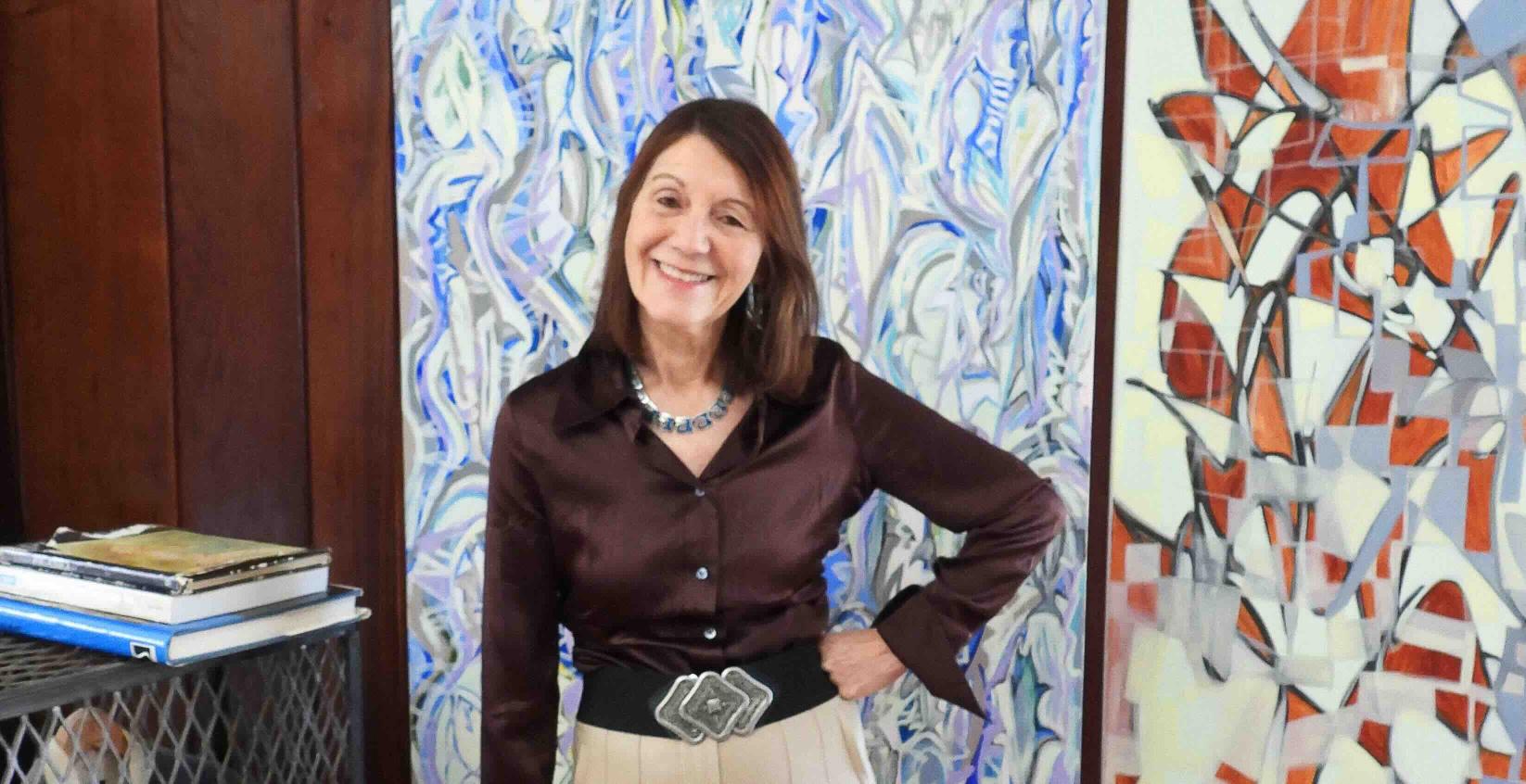
– Denise Carvalho –
Denise, your art speaks of emotions and energy, blending abstraction and geometry. How does your creative process take shape?
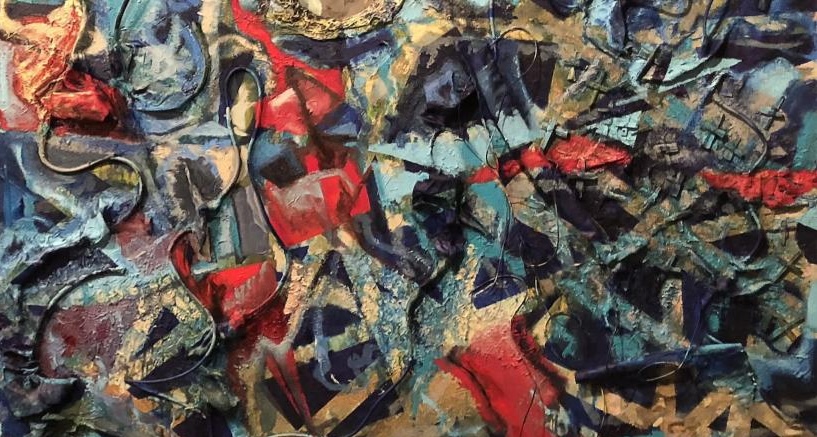
My paintings have always been about emotions transmuted into energy, or energy that ends up sublimated into emotions. My art language was always itself, never something that followed a specific trend, concept, or method. In my work, abstraction and geometry are intertwined as they are parts of the same movement, some are fragments, yet one cannot say whether the extension is not also a fragment, and vice-versa. That unknown is what drives me.
My intention is quite distinct of what is logical. I do not agree that geometry can only be perceived through geometric forms, i.e. a circle, a rectangle, a square, a cylinder. Instead, if I am drawing a straight line, and it becomes curvy, I take that as it leads me to an accepted dilemma as part of the new strategy. On the other hand, the perception of the object doesn’t have to be completed to be recognized. However, what is incomplete to the viewer, is exactly the place where I intend as shift. I like challenging what is expected.
That is the unpredictable sign as a nuance of intention without certainty. This is to me the closest formal expression of the spiritual in art, something created with a higher frequency of response and yet an authentic gesture that challenges the direction of how the work is expected to go. One can blend in or feel the pool of catharsis, aware of a sudden shift toward the other side of the canvas or destabilized by deep and illogical emotional shifts. Line, color, gesture, frequency, all are expected to be missing links of a synergetic motion, as frequency ignites one’s energy without any need for infusing percepts of language.
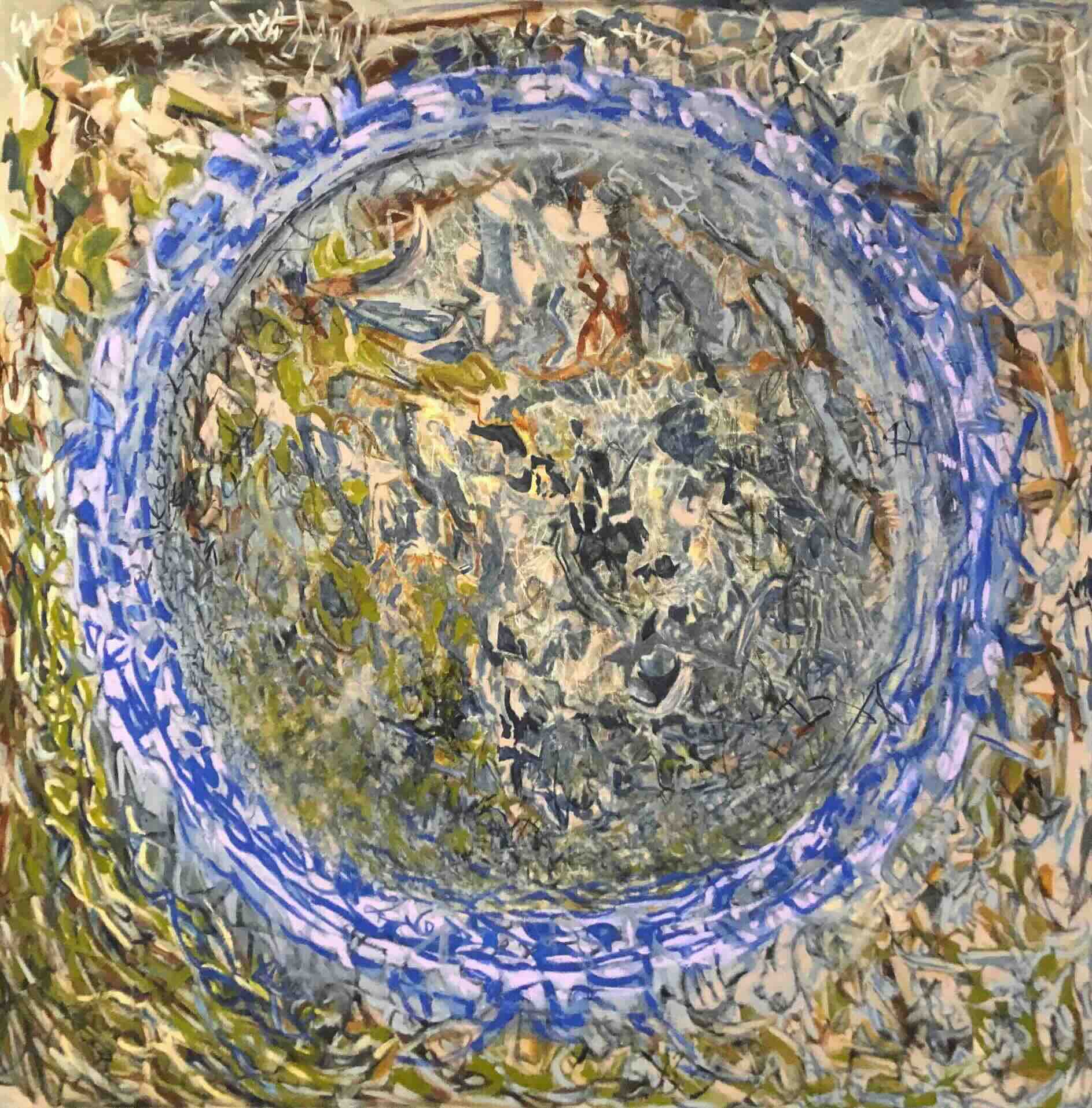
– Denise Carvalho, Muon G-2 Experiment, Oil on canvas –
Your book titled “We are All Children at the End” is about to be published. How did your choice of art as therapy come about?
When my mother came to live with me suffering with Alzheimer’s, I was teaching at Indiana University in Bloomington. One day, I was perusing some of the easier art books at the department’s office and decided to buy one on Byzantine architecture that appeared challenging at first. But I realized something interesting, that anyone could copy the architecture as they were all repetitive known geometric forms.
“Just follow the geometric forms,” I instructed mom. The main guiding source for her drawings was to follow the steps of the building’s structure by copying the geometry of the windows and doors. When I saw her drawings in the next couple of days, I couldn’t believe how precise her observations had been. I even mentioned that she could have been a great architect if she had challenged her father’s prohibition of a woman working on a man’s field. And she laughed. On the next weeks, she produced so many drawings that were outstanding for her inexperience. A couple of years later, she was copying Picasso, Renoir, Klimt, Vigée Le Brun, Van Gogh and Greuze. Even if the details of hands and feet weren’t precise, the feeling I had was that she could capture the realistic expression of the figures.
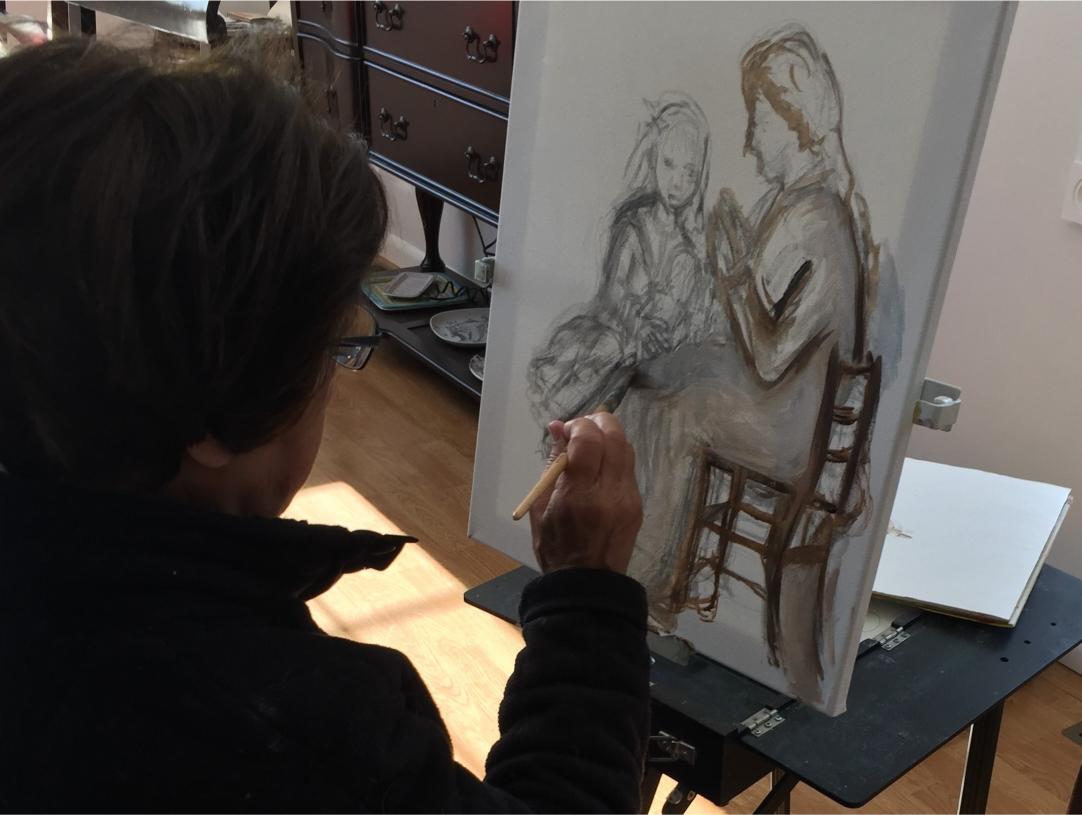
– Denise’s mother while painting –
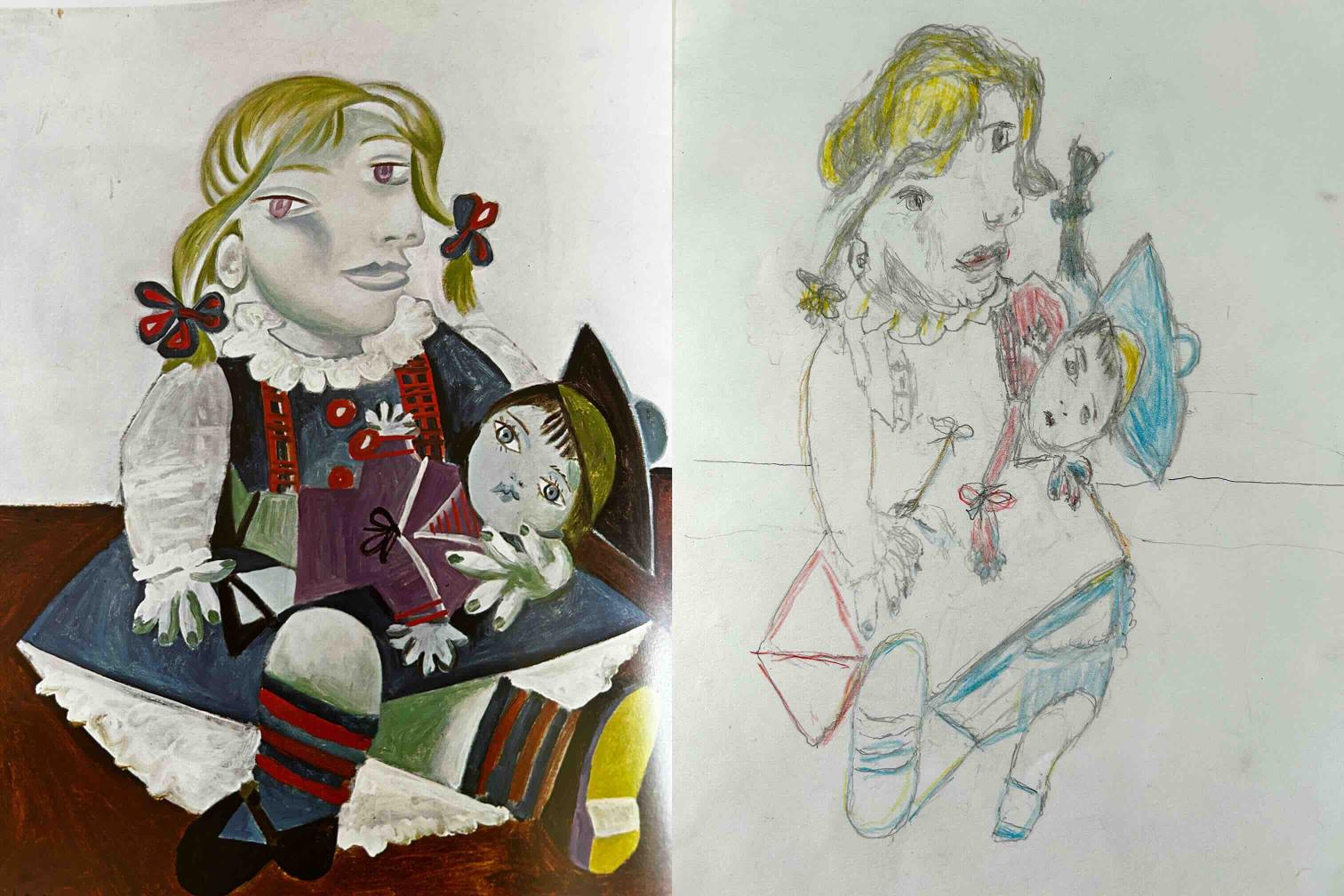
– On the left Pablo Picasso, Portrait of Maia with a Doll, 1938, oil on canvas – On the right Ceny Carvalho copying Picasso painting –
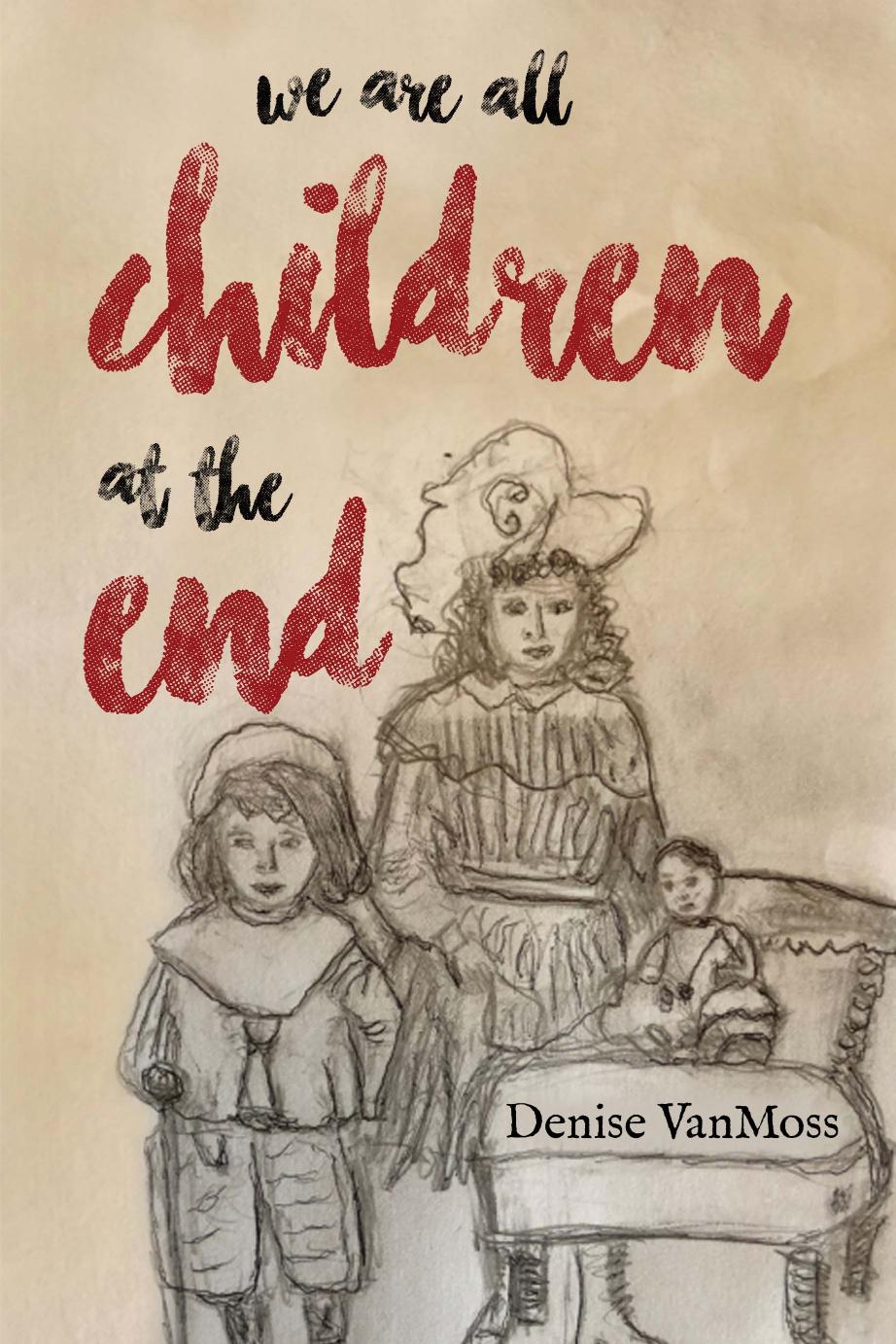
– Cover image of We are All Children at the End, drawing made by Ceny Carvalho –
Your career as an artist began in New York, where you’ve lived since 1985. Can you tell us about this journey?
My career as an artist began in New York, but in Brazil, I was already an artist in my own right, having studied with Ivan Serpa when I was 10 years old, and he was extremely known as one of the main leaders of the Neo-Concrete movement in the late 1950s. In my early 20s, I also took classes at the Museu de Arte Moderna. In New York City in the mid-1980s, I began studying with Rudolf Baranik at the Art Students League and later earned my BFA at the School of Visual Arts. Even at SVA, I always felt that my work was my own making. During that time, I was confident about my work and began showing it in spaces, galleries, in group shows, even on abandoned buildings with other artists seeking spaces for their work, like PS 164, my first group show in New York City, and this was before PS1 was founded.
Then I began showing at various galleries, as Gallery One in SoHo, Kentler International Drawing Space in Brooklyn, Drawing Room in SoHo, Myungsook Lee Gallery, Police Building juried by Ivan Karp in Manhattan, Tompkins Square Park in an activist mural show, Museo Recoleta in Buenos Aires, City University in Paris, Palacio Pombal in Lisbon, at the first MOCHA on Broadway in Soho. My latest shows were two solo exhibitions at Jadite Gallery and Abney Gallery in SoHo.
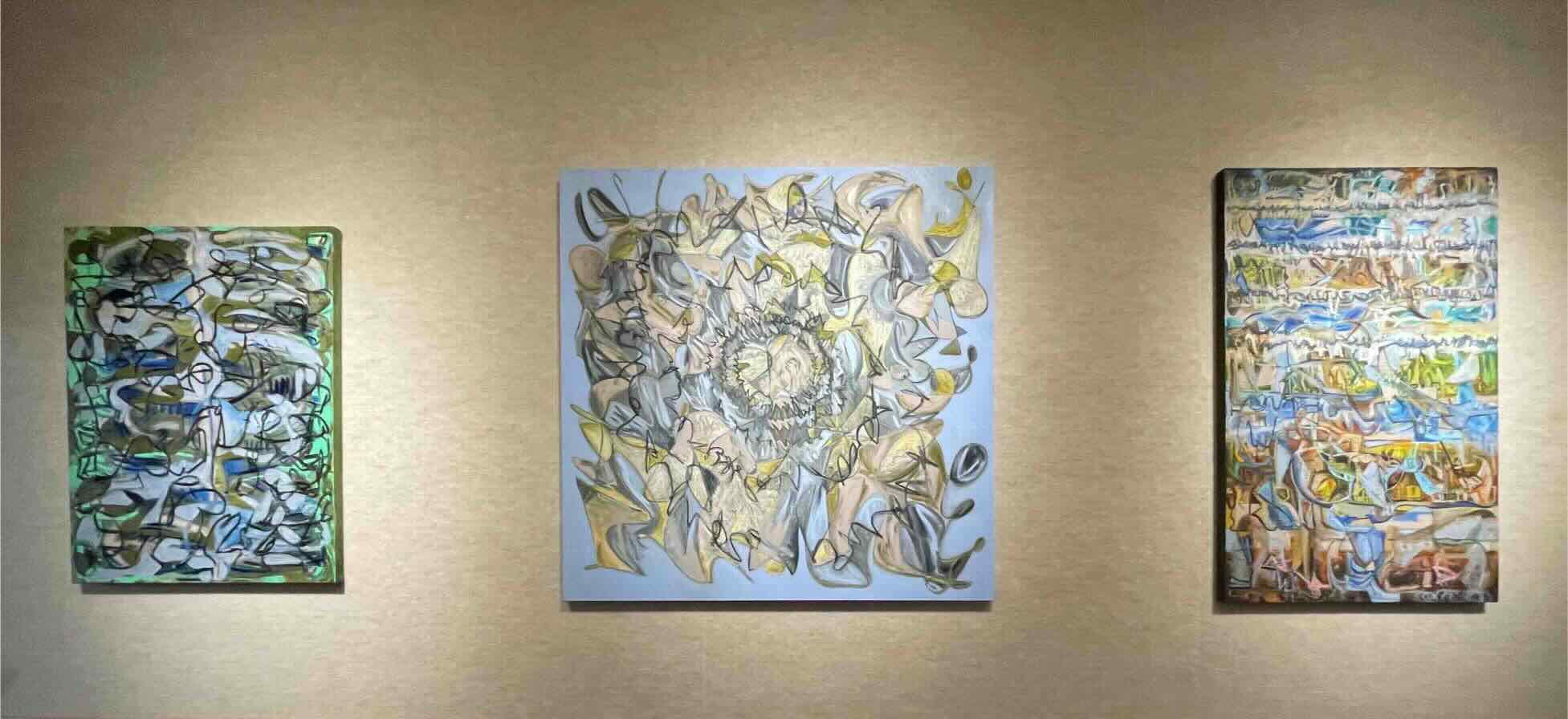
– Denise Carvalho, Solo Show at the Public Library in Cazenovia –
After I had experimented with deconstructive figurative paintings in the 1980s, my work began changing to abstraction in the early 1990s, leading to large and heavily chthonic paintings, with dark tones in acrylic and mixed media, with gel mixed with sand or soil, and human hair collected by me in hairdresser salons. These works were only shown at Abney gallery in SoHo and at Kentler International Drawing Space Brooklyn. I still have these amazing works, except for one that I began changing it to a point of no return. In 2000, I also represented the US at the III Biennale Internazionale dell’Arte Contemporanea, in Rassegna Stampa (Florence, Italy). As life became very difficult financially, and I had a husband and a child, I had to focus on teaching to make sure I could provide as much as we needed.
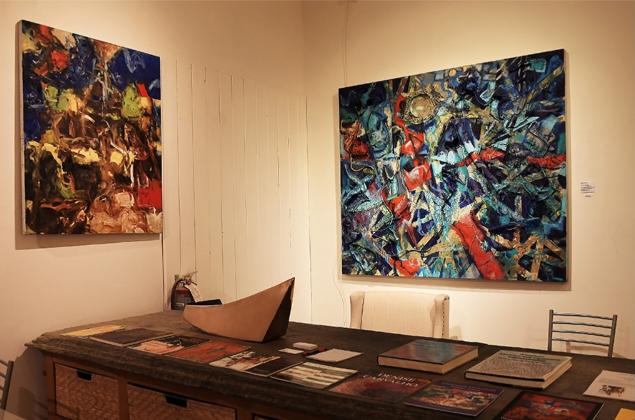
– Exhibition at older gallery by Anita Shapolsky in SoHo in 2018 –
Throughout my life, I discovered talents as life pushed me through unexpected paths outside my comfort zone, writing poetry and prose in English as once I wrote in my native Portuguese. Curating and writing about other artists’ works made me realize how the ideas of others contribute to our own knowledge and abilities, as people kept asking me to write an essay about their work for their catalogues. But the work wouldn’t provide me with enough payment for the piling up bills.
After my mother came to live with me with Alzheimer’s in 2015, and I started to teach her art so she could find something she enjoyed, teaching her made me feel a strong urge to return to painting in full force. That kind of teaching to someone who needed it desperately but didn’t know it, was a real challenge, but one that I felt I could provide. And it made me happy seeing her bloom. After months seeing her rediscovering who she was through the arts, despite the many illnesses she endured, I finally felt I was doing something that mattered. It gave me a desperate urge to create a new series of abstract paintings. These were very large, and I always loved large works which I would feel as disappearing in front of the canvas, despite my own large gestures.
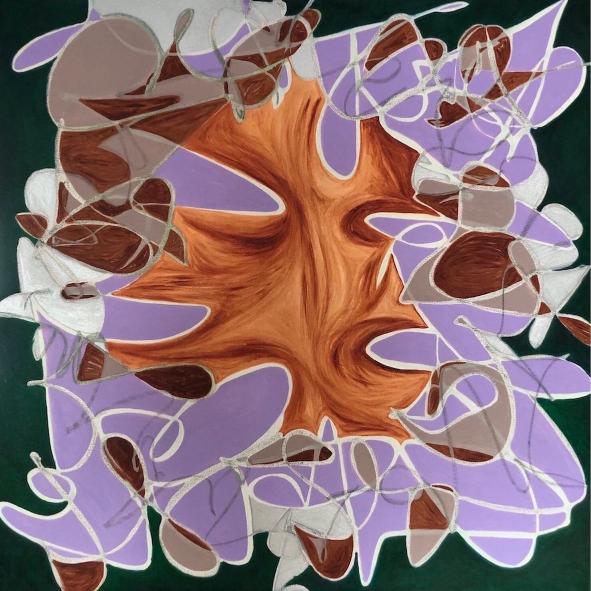
– Denise Carvalho, The thinking tree (2023), Oil on canvas, 36 by 36” –
At the same time, from 1995 to 2024, you were an international art critic and curator. Is there a common thread linking the exhibitions you curated?
My curatorial experience began as an extension from writing as a critic. I was invited to be the Critic in Residence at Art Omi in 2000 and Critic Emeritus in 2012. Since the 1990s, Art Omi had been a residence for up-and-coming international artists, exploring all kinds of cultural interests, mediums and technologies. The connection with Omi led me to curate many exhibitions as I realized that my deepest success was amongst artists from other countries, especially Eastern European and Asian artists. But getting to know some of these artists in more depth was writing about them, and curating their works. These and other local and international opportunities opened doors to my projects, bringing momentum to the themes and topics explored during the events.
I curated several collaborations with Monica Szewczyk, the director of Galeria Arsenal in Bialystok, Poland, organizing shows also in New York City, and Rio de Janeiro, Brazil. Many of these shows included public panel discussions, and walk-and-talk about the works as viewers followed us through the rooms. This approach welcomed more interaction with the public. My projects had conceptual themes that raised dialogues regarding race and identity, religion and economics, even topics that explored both American and outsider military groups, some radical as the Shining Path in certain regions of Peru. I also curated exhibitions at the Dumbo Arts Center, at the Chelsea Art Museum, two exhibitions of Korean and Chinese art and later a solo show of Czech Republic artists from solidarity.
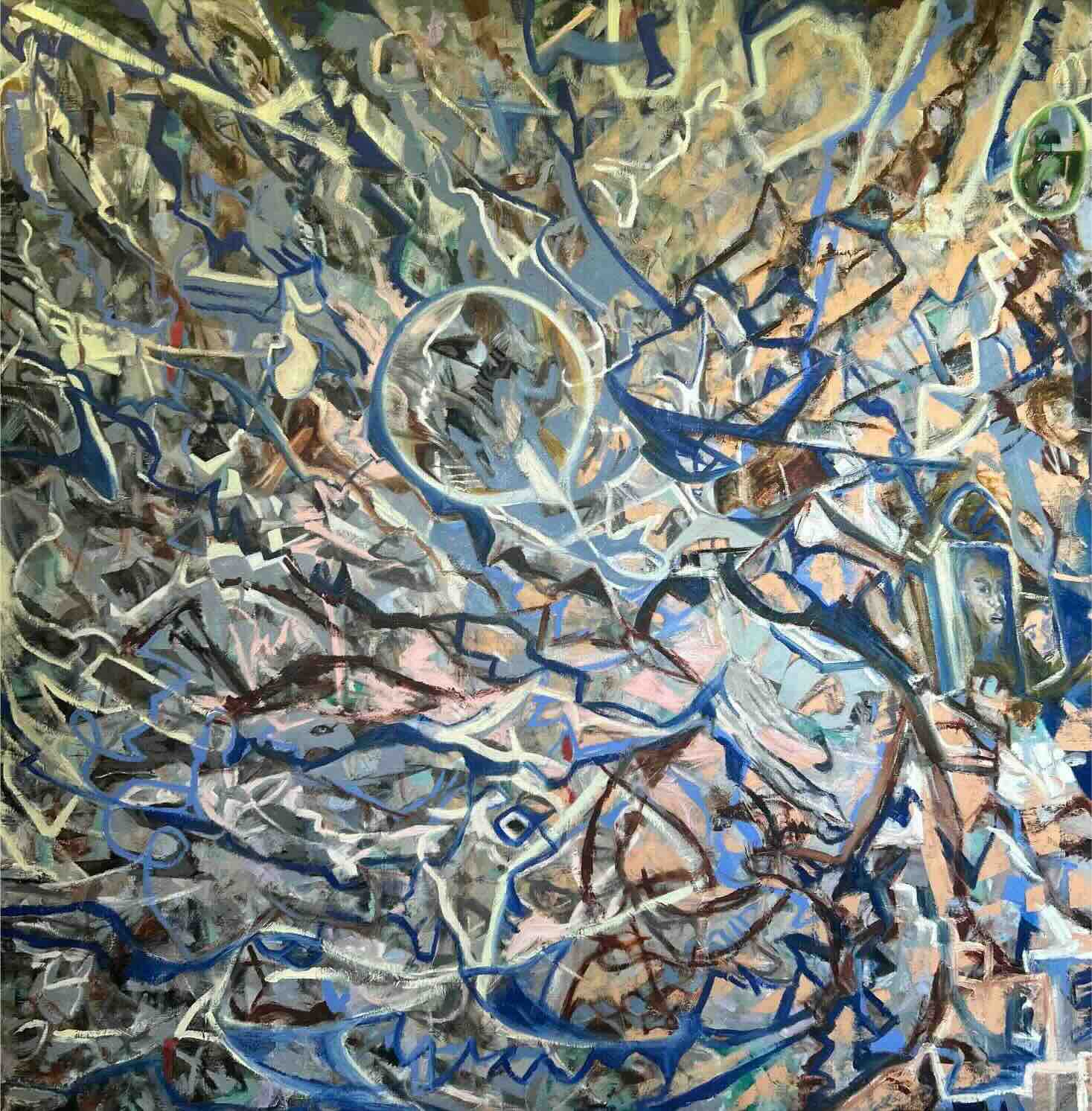
– Denise Carvalho, Seeing it All (2025), oil on canvas, 62×62’’ –
The experience of curating and writing about various topics and mediums, have been transformative for me as a painter and thinker, as in my own vision and strategy toward my creative process, I also utilize various perceptive relationships through form, color, movement. Art can transcend the current influences of an idea in support of a new potentiality, that way one can reinvent oneself simply in the perception that leads to the persuasion of the image.
Discover more at Denise Carvalho
“We are All Children at the End” is available at Pegasus Publisher
Denise’s art is available at Singulart
To purchase Denise Carvalho’s art works, please contact Chrissy Moore at chrissy@chrissymoore.art
Cover photo: Denise Carvalho, Labyrinth of Chaos, Exhibition at Anita Shapolsky Gallery in NYC in 2022
Article edited by Dafne Ambrosio
 By mb@admin