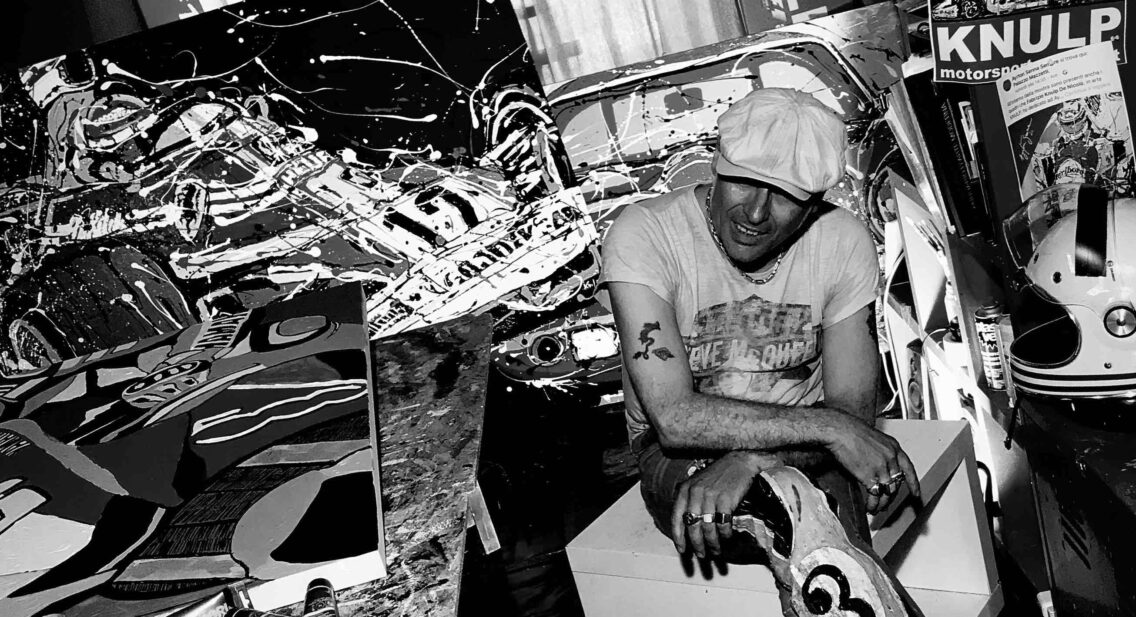
On 20th February 1909, Filippo Tommaso Marinetti, pretending to be in love with the daughter of a wealthy Egyptian, one of the publishers of the Parisian newspaper “Le Figaro,” managed to have the founding manifesto of Futurism published on the front page of the prestigious newspaper. The operation caused a sensation worldwide. Of the eleven points constituting the text “Le Futurisme,” Fabrizio de Nicolò, known as Knulp, adopted the fourth article: “We affirm that the world’s magnificence has been enriched with a new beauty: the beauty of speed.”
On this concept, Fabrizio de Nicolò, an Italian born in 1962, bases the dynamics of his art. He borrows his stage name, Knulp, from the novel by the future Nobel laureate Hermann Hesse. The work, published in 1915, tells the adventures of a vagabond whose name gives the title to the novel. Taverns, forests, and dialogues with God accompany the adventures of this extravagant character. Today, the soul of Knulp is embodied in Fabrizio de Nicolò, a painter of speed, racing cars, motorcycles, and the faces of famous pilots hidden behind shiny helmets.
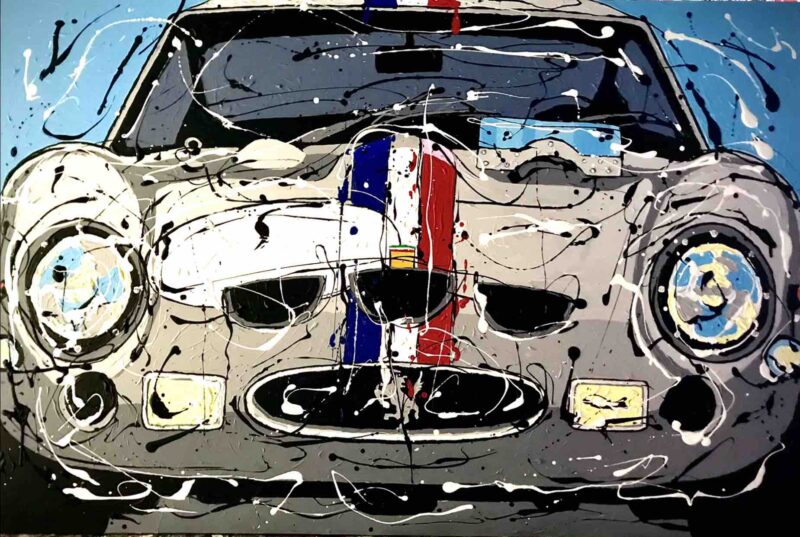
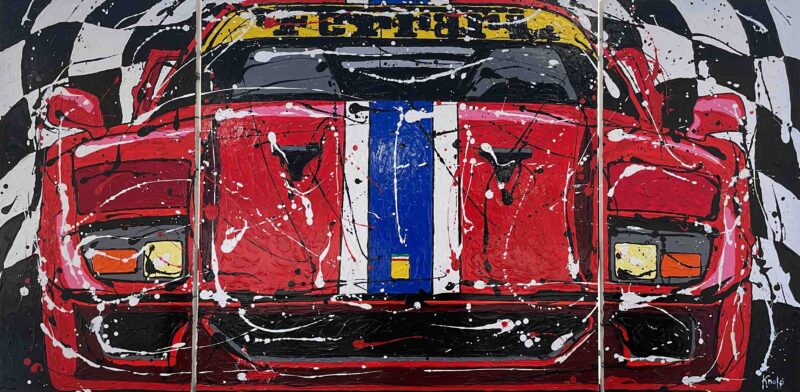
For the artist, images must always convey joy; even if they commemorate a glorious past, they are never nostalgic. Vivid colours and flashes of light always make the works contemporary, belonging to the present. The passion for engines and American Pop Art is a perfect combination for the Turin-based painter. Through brushes and spatulas, and thanks to his skills as a professional photographer, he reproduces the colour of the engine roars. Much of his production is dedicated to motorsports.
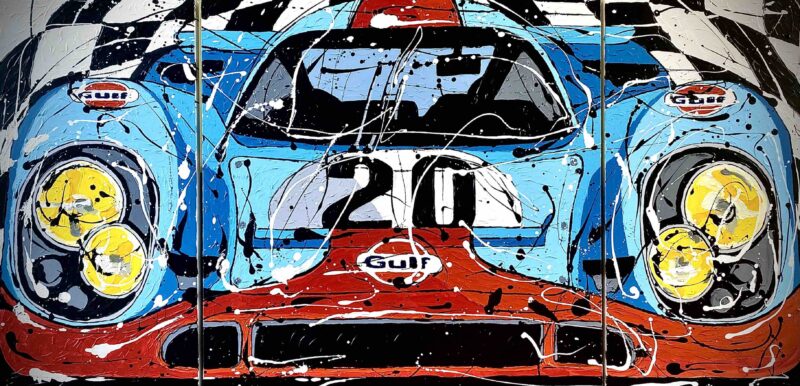
The framing cuts are the same as those of professional sports photographs, of which Knulp is a skilled proponent. Bright colours and the use of dripping transport the viewer into a Pop world. The fuel for these fantastic journeys is the smell of gasoline and the adrenaline caused by dizzying racing circuits.
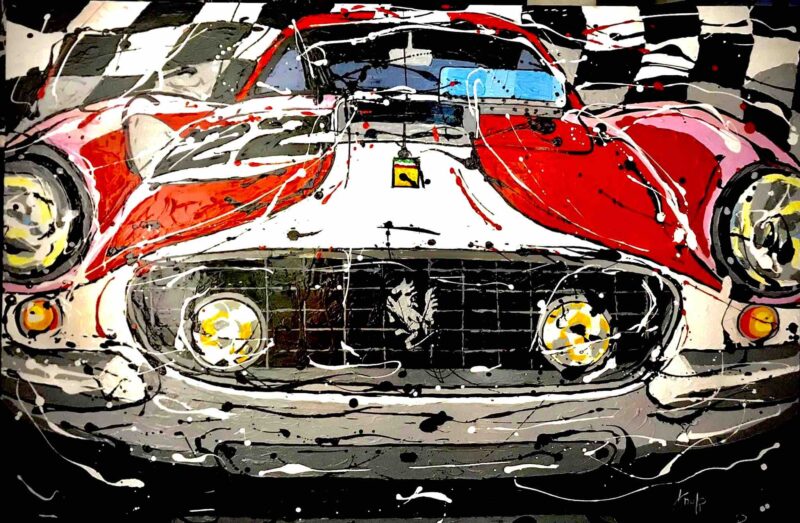
The golden age of motoring and motorcycling is found in those winding paths dictated by lines of colour and splashes of reflections from action painting. His style is unique; we can define it as pop impressionism. His works resemble a tidy tangle, a concrete mass of colours and abstract but coherent signs with reality. His works blend well with international exhibition spaces. The locations of his exhibitions are not only the classic and conventional exhibition halls but prestigious environments orbiting the world of motors. From 1915 to today, the world has had to adapt to this lifestyle in addition to the futurists. In a society that leads us to run more and more, the paradox is precisely this art, born of that futurism, that gives us a Pit Stop to meditate the mind, to rest the soul.
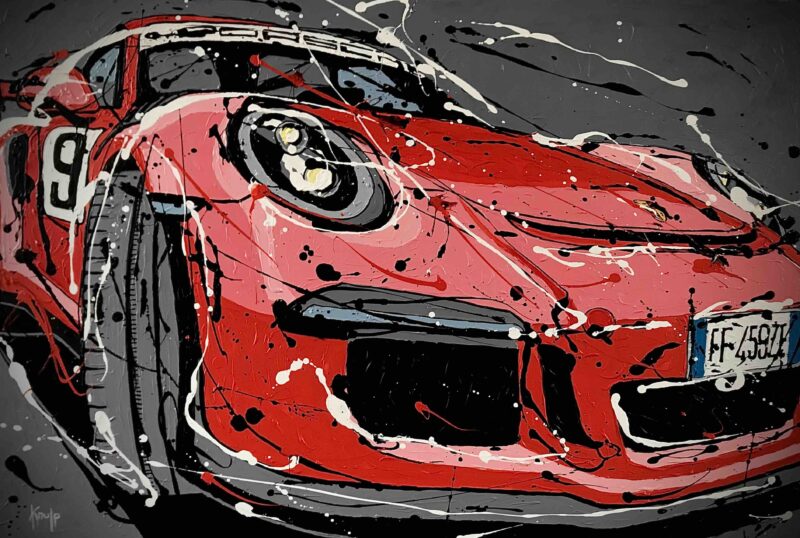
Observers stop in front of the exhibited works, seemingly suspended but instead continuing to run amidst the roar of wheels and reflections of colour. Energy has many forms and different colours. The abstraction present on the canvases is a contour of real forms. It is the result of centrifugal force and the displacement of air.
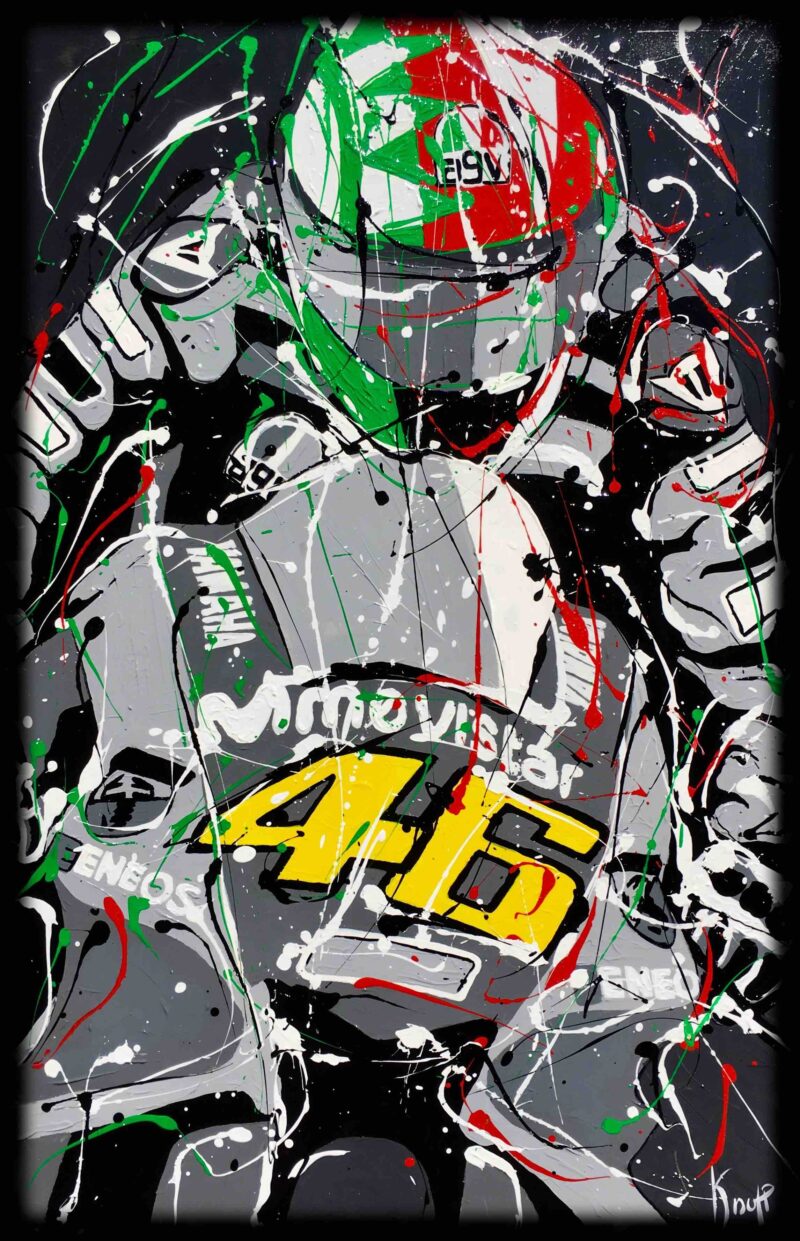
Art is a necessity, and Knulp’s need is to stop time to better appreciate and love speed.
Discover more @ Knulp Motor Art
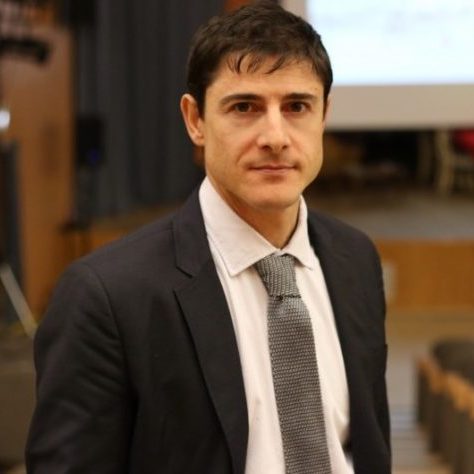
Article edited by Prof. Luca Caricato
Luca Caricato – The World of Art
Leonardo Da Vinci Scholar
Art Historian – Art Expert